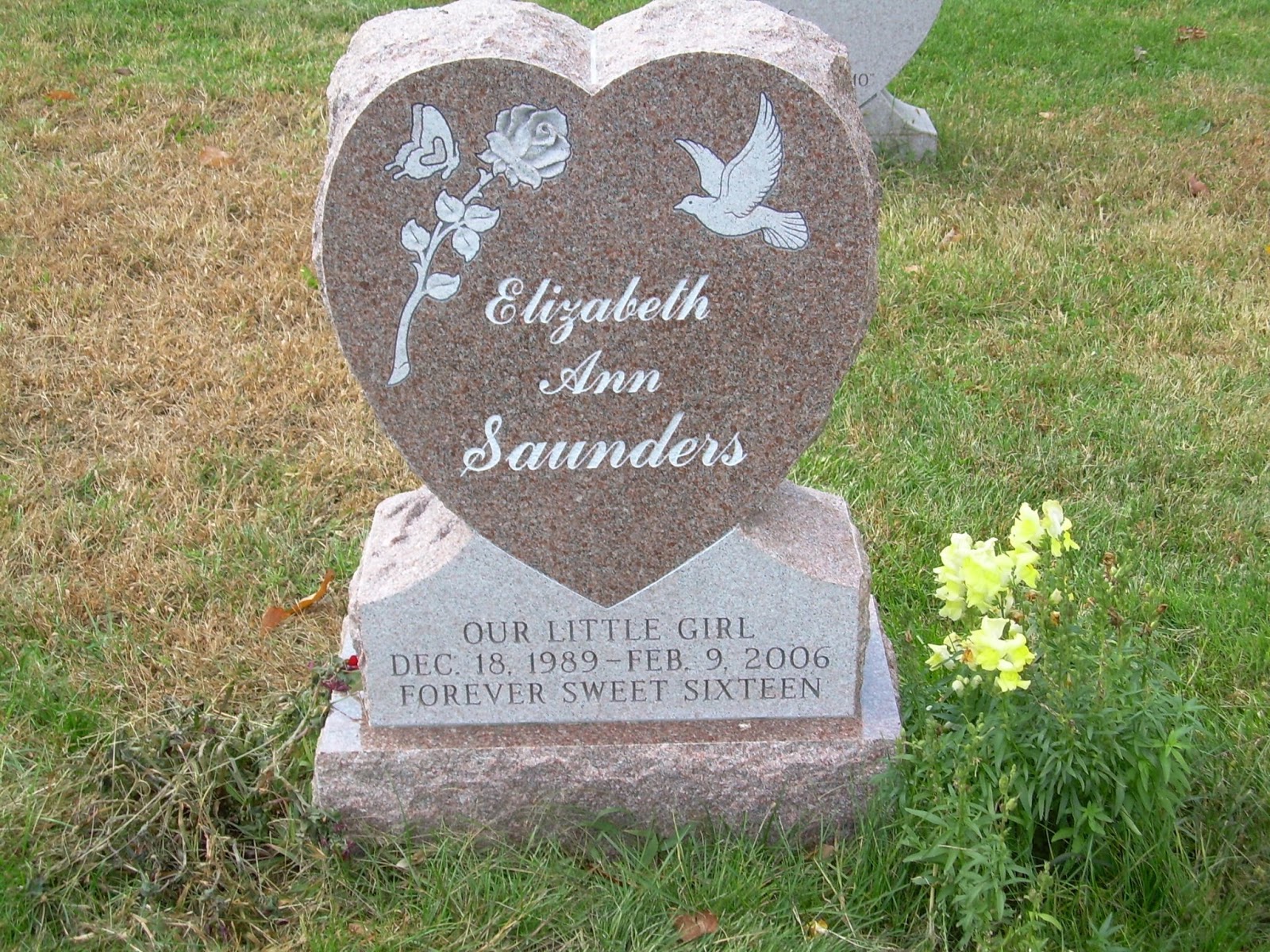
Wednesday, March 5, 2014

Subject: HB 5147 – Cytomegalovirus (CMV) Public Education Program

I am trying to get a bill passed into law so that women will know how to protect their babies from the suffering my daughter endured for years. You may view and show others photos of my daughter and facts about the preventable #1 viral cause of birth defects at:
PowerPoint on congenital CMV

I sent the following letter to the following on Connecticut's Public Health Committee (if you live in Connecticut, you will want to do this too, but here is a simpler one you may want to use:Sample Letter to Connecticut's Public Health Committee). Or, you may just want to call:
      Public Health Committee
      Room 3000, Legislative Office Building
      Hartford, CT 06106
      Phone: 860-240-0560
Emails of the members at: Committee Contact Information

Also, Find YOUR Representative, Senator and Congressperson at: http://www.cga.ct.gov/rwd/cgafyl/default.asp

Tell them, and the public health committee, that you support:

HB 5147: [pdf]AN ACT CONCERNING NEWBORN SCREENING FOR GLOBOID CELL LEUKODYSTROPHY AND CYTOMEGALOVIRUS AND ESTABLISHING A PUBLIC EDUCATION PROGRAM FOR CYTOMEGALOVIRUS.


Subject: HB 5147 – Cytomegalovirus (CMV) Public Education Program 

Dear Representatives Susan Johnson, Phillip Miller, Dr. Prasad Srinivasan, and Senators Jason Welch, Terry Gerratana and Gayle Slossberg,


I live in Connecticut and testified in Hartford on Friday, Feb. 28, about my daughter’s 16 years of suffering then death from congenital (present at birth) cytomegalovirus (CMV).


According to the Centers for Disease Control and Prevention (CDC), CMV causes more disabilities than Down syndrome and is preventable.
With proper education, mothers can avoid passing it to their unborn children. HB 5147 creates an education program to make sure women and their physicians have the appropriate information about CMV. The State of Utah passed a similar bill last summer. (See: http://www.health.utah.gov/cshcn/CHSS/CMV.html)


The education and early identification of CMV proposed in HB 5147 will save Connecticut money by preventing the birth defects and disabilities caused by CMV. According to an article co-authored by Dr. Cannon of the CDC, “The direct annual economic costs of caring for these children are estimated at $1-2 billion…by missing prevention opportunities, we in the medical and public health communities are washing our hands of the congenital CMV disease epidemic.”[i]


According to one study, “fewer than half (44%) of OB/GYNs surveyed reported counseling their patients about preventing CMV infection.”[ii] In an article published in Fit Pregnancy, one doctor explained why: "The list of things we're supposed to talk about during women's first visit could easily take two hours and scare them to death," explains OB-GYN Laura Riley, M.D., director of infectious disease at Massachusetts General Hospital in Boston. "That's just the reality."[iii]

The following statistics are from the CDC’s website (http://www.cdc.gov/cmv/index.html):
 
  • CMV is the most common viral infection that infants are born with in the United States.
  • About 1 in 150 children is born with congenital CMV infection (in other words, 30,000 children are born with congenital CMV infection in the U.S. each year).
  • Congenital CMV causes one child to become disabled every hour.
Expectant mothers and women who plan on having children should know about CMV.  According to a study published in 2006, only 22% of women surveyed knew about CMV.[iv]


In my case, none of my OB/GYNs told me how to prevent congenital CMV until after my daughter was born. Then I received literature stating women who work in daycare, or have a young child in daycare, are at higher risk for catching it as preschoolers are the majority of carriers. Mothers must wash their hands after handling toys and should not kiss their toddlers around the mouth.  While I was pregnant with Elizabeth I had a toddler plus ran a licensed daycare center. Nowhere in the licensing literature was there a CMV prevention message. In milder cases, children may lose hearing or struggle with learning. But Elizabeth's case was not a mild one.

I see on the HB 5147 webpage that approximately 90 letters of testimony were posted, including the following from the medical community: 
·        02/28/2014 Gail Demmler, MD
As you are aware, all of the letters of testimony can be viewed at: Click for Public Hearing Testimony
Please help the country make congenital CMV prevention as well-known as the “don’t change the kitty litter” rule when pregnant. Every time another new, distraught parent contacts me asking why no one warned them how to protect their baby from congenital CMV, I feel sick wondering why congenital CMV prevention still isn’t part of a doctor’s standard practice of care. Please help educate the public.
I am the author of the memoir, Anything But a Dog! The perfect pet for a girl with congenital CMV (cytomegalovirus) and the parent representative of the Congenital CMV Foundation. See my short interview on USA 9 News clip.
I would be happy to answer any questions you have or put you in touch with medical professionals who work with congenital cytomegalovirus.
 Thank you in advance for your support.
Sincerely,
 
Lisa Saunders
P.O. Box 389
Mystic, Connecticut 06355
saundersbooks@aol.com 
More information or sources:


###


[i] “Washing our hands of the congenital cytomegalovirus disease epidemic”: http://www.pubmedcentral.nih.gov/articlerender.fcgi?artid=1182379

 
[ii] "Knowledge and Practices of Obstetricians and Gynecologists Regarding Cytomegalovirus Infection During Pregnancy --- United States, 2007": www.cdc.gov/mmwr/preview/mmwrhtml/mm5703a2.htm

 
[iii] Article quoting OB/GYN why CMV prevention isn't discussed in Fit Pregnancy Magazine, June/July 2008 issue: Protect Your Baby From A Tot-Borne Virus or visit: www.fitpregnancy.com/yourbaby/babycare/40723077.html?subsection=baby_health_development

[iv] 2006 PubMed Central article, "Knowledge and Awareness of Congenital Cytomegalovirus Among Women," http://www.pubmedcentral.nih.gov/articlerender.fcgi?artid=1779612


My Testimony at the hearing in Hartford:


Representative Johnson, Senator Gerratana and distinguished members of the Public Health Committee:

I am Lisa Saunders of Mystic, Connecticut, parent representative of the Congenital CMV Foundation, and author of Anything But a Dog! The perfect pet for a girl with congenital cytomegalovirus.*
I am in support of H.B. No. 5147, “AN ACT CONCERNING NEWBORN SCREENING FOR GLOBOID CELL LEUKODYSTROPHY AND CYTOMEGALOVIRUS AND ESTABLISHING A PUBLIC EDUCATION PROGRAM FOR CYTOMEGALOVIRUS.”

I am a parent who didn't know how to prevent congenital cytomegalovirus (CMV) until it was too late for our daughter Elizabeth. The moment she was born in 1989, my first thought was, “Her head looks so small—so deformed.”

My doctor told us, "If your daughter lives, she will never roll over, sit up, or feed herself." Elizabeth's birth defects were caused by congenital CMV. I was given literature stating women who work in daycare, or have a young child in daycare, are at higher risk for catching it as preschoolers are the majority of carriers. Mothers must wash their hands after handling toys and should not kiss their toddlers around the mouth. 

Why hadn’t my OB/GYNs warned me about this—especially since, according to the CDC, congenital CMV causes more disabilities than Down syndrome? While I was pregnant with Elizabeth I had a toddler plus ran a licensed daycare center. Nowhere in the licensing literature was there a CMV prevention message. In milder cases, children may lose hearing or struggle with learning. But Elizabeth's case was not a mild one.

Over the years, my husband and I watched our daughter endure cerebral palsy; frequent pneumonia; major surgeries, including spinal fusion; and worst of all, seizures. Yet despite it all, Elizabeth remained a cheerful, happy little girl. By her 16th birthday, we felt so proud of her. Although she only weighed 50 pounds, was still in diapers and unable to speak or hold up her head, she was lovely to us with her wavy brown hair, large blue eyes and soul-capturing smile.

Elizabeth especially loved being surrounded by people and going to school. Less than two months later when I dropped her off, I strapped her into her wheelchair, held her face in my hands and kissed her cheek. I said, “Be a good girl today!” She smiled as she heard her teacher say, “Elizabeth is always a good girl!” Elizabeth died several hours later of a seizure.

While holding her body on his lap, my husband looked down into her lifeless eyes and cried, “No one is ever going to look at me again the way she did.”

After presenting Elizabeth’s story at the international Congenital CMV conference at the CDC in 2008, mothers pushed their children toward me in wheelchairs and asked, “Why didn’t my OB/GYN tell me how to prevent this?” One mother even asked, "Learning what you did, why didn't you shout it from the rooftops?"

Last summer, when Utah passed a bill similar to this one, I finally found hope that CMV prevention would become as famous as the “don’t change the kitty litter” rule when pregnant. According to an article co-authored by the CDC’s Dr. Cannon, “The direct annual economic costs of caring for these children are estimated at $1-2 billion…by missing prevention opportunities, we in the medical and public health communities are washing our hands of the congenital CMV disease epidemic.” Please do your part to shout CMV prevention from the rooftops by passing this bill. I would be happy to answer to any questions.

***

In addition to my testimony, I ask you to consider the published testimonies of support for this bill from Yale University’s Dr. Eugene Shapiro, Professor of Pediatrics, Epidemiology and Investigative Medicine and from Dr. Demmler-Harrison, the Director of National Congenital CMV Disease Registry, as well as the other doctors who have worked with congenital cytomegalovirus and support this bill.

The following statistics are from the CDC’s website at: www.cdc.gov/cmv

  • CMV is the most common viral infection that infants are born with in the United States.
  • About 1 in 150 children is born with congenital (present at birth) CMV infection. This means that in the United States, about 30,000 children are born with congenital CMV infection each year.
  • About 1 in 750 children in the United States is born with or develops permanent problems due to congenital CMV infection. In the United States, more than 5,000 children each year suffer permanent problems caused by CMV infection.


Until OB/GYNs make CMV prevention a standard practice of care, I'm trying to "shout it from the rooftops" through my memoir, Anything But a Dog! The perfect pet for a girl with congenital CMV (cytomegalovirus)* and the parent representative of the Congenital CMV Foundation,  which raises awareness about maternal testing for first infection during pregnancy, newborn testing and the need to develop a vaccine.
(See my short interview on USA 9 News clip.)


Lisa Saunders, Parent Representative, Congenital CMV Foundation


Author of Anything But a Dog! The perfect pet for a girl with congenital CMV (cytomegalovirus)


*ABOUT THE BOOK, "ANYTHING BUT A DOG! THE PERFECT PET FOR A GIRL WITH CONGENITAL CMV (CYTOMEGALOVIRUS)," WRITTEN BY LISA SAUNDERS AND PUBLISHED BY UNLIMITED PUBLISHING, LLC:

This is the story of a mother’s humorous and moving search for one pet to suit two very different daughters-one a tomboy, the other mentally and physically disabled from the # 1 birth defects virus, congenital CMV (cytomegalovirus). Lisa Saunders says “no” to her daughter Jackie’s pleas for a dog, fearing it will be too rambunctious around Jackie’s disabled little sister Elizabeth. But she does make her a promise she thinks will never come to pass: “If God brings a dog to our door, then you can have it.” In the meantime, the family wrestles with a series of dysfunctional pets: a flesh-eating hamster, an attack cat, killer ants and a very stinky rabbit. Then one day, the unexpected happens: a shivering, dirty puppy shows up at their door. But is this dog really Heaven-sent?

Plus: The latest news on how to prevent the far-reaching but under-reported effects of congenital CMV, the #1 viral cause of birth defects-more common a cause of disabilities than Down syndrome. It also contains highly useful sections with Resources, Contacts and Support for anyone whose life is touched by CMV.


ALL MEMBERS OF CONNECTICUT'S PUBLIC HEALTH COMMITTEE:


LEGISLATIVE OFFICE BUILDING, ROOM 3000

HARTFORD, CT 06106-1591

TELEPHONE (860) 240-0560 FAX (860) 240-5306
 
2013-2014 Committee Members
Senator Terry Gerratana, Co-Chair Representative Susan Johnson, Co-Chair


gerratana@senatedems.ct.gov Susan.Johnson@cga.ct.gov

Senator Gayle Slossberg, Vice-Chair Representative; Philip Miller, Vice Chair

slossberg@senatedems.ct.gov Philip.Miller@cga.ct.gov

Senator Jason Welch, Ranking Member Rep.; Prasad Srinivasan, Ranking Member


Jason.Welch@cga.ct.gov Prasad.Srinivasan@housegop.ct.gov

Representative David Alexander, Representative David Arconti

David. Alexander@cga.ct.gov David.Arconti@cga.ct.gov

Representative Whit Betts, Representative Michelle Cook

Whit.Betts@housegop.ct.gov Michelle.Cook@cga.ct.gov

Representative Theresa Conroy, Representative Christopher Davis

Theresa.Conroy@cga.ct.gov, Christopher.Davis@housegop.ct.gov

Representative Mike Demicco, Representative Gary Holder-Winfield


Mike.Demicco@cga.ct.gov, Gary.Holder-Winfield@cga.ct.gov

Representative Debralee Hovey, Senator Robert Kane


Debralee.hovey@cga.ct.gov, Rob.Kane@cga.ct.gov

Representative Themis Klarides, Representative James Maroney


Themis.Klarides@housegop.ct.gov, James.Maroney@cga.ct.gov

Senator Anthony Musto, Representative Jason Perillo

Musto@senatedems.ct.gov, Jason.Perillo@housegop.ct.gov

Representative Emmett Riley, Representative Kevin Ryan


Emmett.Riley@cga.ct.gov Kevin.Ryan@cga.ct.gov

Representative Peggy Sayers, Representative David Scribner


Peggy.Sayers@cga.ct.gov, David.Scribner@housegop.ct.gov

david.scribner@cga.ct.gov

Representative Peter Tercyak, Representative Patricia Widlitz


Peter.Tercyak@cga.ct.gov, Patricia.Widlitz@cga.ct.gov

Representative Melissa Ziobron, Representative David Zoni


Melissa.Ziobron@housegop.ct.gov, David.Zoni@cga.ct.gov

Melissa.ziobron@cga.ct.gov


Monday, February 17, 2014

How to Get States to Follow Utah's cCMV education

Now that Utah has passed a law making congenital cytomegalovirus (CMV) education mandatory, we in other states can take their work and pass it on to our State's Health Departments and political representatives.

In summary, this is what happened in Utah: Cytomegalovirus (CMV) Public Health Initiative H.B. 81 (2013 General Session) UCA 26-10-10, whose Chief Sponsor was Representative Ronda Rudd Menlove, will go into effect on July 1, 2013. This law (Cytomegalovirus Public Education and Testing) directs the Utah Department of Health to create a public education program to inform pregnant women and women who may become pregnant about the occurrence of CMV, the transmission of CMV, the birth defects that CMV can cause, methods of diagnosis, and available preventative measures. This law also directs medical practitioners to test infants, who fail two newborn hearing screening tests, for congenital CMV and inform the parents of those infants about the possible birth defects that CMV can cause and the available treatment methods.

Where I began in Connecticut:
How a bill becomes a law in Connecticut: http://www.cga.ct.gov/html/bill.pdf
I didn't know how to get Connecticut to pass such a law so I visited my Town Clerk (they are voted into office so are interested in helping their residents). I asked her how I could get Connecticut to follow Utah's example. Although I could have found out who my representative was online, she looked it up for me and gave me the representative's home address (it's public record). She then told me how to get the ball rolling. It just helps to have a local person guide me through the government process.

Here is the email I send seeking support for CMV prevention:

Dear [_______],


I was wondering if there is anything I can do to help you to prevent birth defects from congenital cytomegalovirus (CMV)? CMV is the #1 birth defects virus and causes more disabilities than Down syndrome, yet most women don’t know how to prevent it. It’s too late for my daughter Elizabeth who was born with a severely damaged brain, but I hope you will propose a bill similar to the one that passed in Utah in the Summer of 2013 to protect future unborn babies from such a fate.

I live in Mystic, Connecticut, and am a parent who didn't know how to prevent congenital CMV until it was too late for our daughter. She passed away at the age of 16 during a seizure and had been gradually losing her hearing. I am the author of  the book,

Anything But a Dog! The perfect pet for a girl with congenital CMV and parent representative of the Congenital CMV Foundation.

OB/GYNs didn’t tell me how to prevent CMV until after Elizabeth was born. Then I learned those working in daycare, or have a child in daycare, are at a higher risk for catching it as preschoolers are the majority of carriers. Mothers must wash their hands after handling toys and should not kiss their toddlers around the mouth.  While I was pregnant, I had a toddler plus ran a licensed daycare center. In milder cases, children may lose hearing or struggle with learning. But Elizabeth's case was not a mild one. She was quadriplegic from cerebral palsy, and suffered from frequent pneumonia, major surgeries and ever-worsening epilepsy. She died during a seizure at 16.

Less than half of OB/GYNs surveyed said they counseled their patients on how to prevent CMV infection, despite these U.S. statistics from the CDC:

•Congenital CMV causes one child to become disabled every hour.

•About 1 in 150 children is born with congenital CMV infection each year (approximately 30,000).

According to an article co-authored by the CDC’s Dr. Cannon, “The direct annual economic costs of caring for these children are estimated at $1-2 billion…by missing prevention opportunities, we in the medical and public health communities are washing our hands of the congenital CMV disease epidemic.”
I have been trying for years to raise awareness through speaking engagements, including those sponsored by the CDC, USA 9 News, books, even my most recent book, Mystic Seafarer’s Trail: Journey to “7 Wonders,” Titanic’s Shoes and Amelia Earhart’s Sectret Wedding, includes information on CMV prevention.   

Once Utah got their cytomegalovirus education bill passed, I finally found hope that the rest of the country would find it easier to follow suit. Utah passed a law making it mandatory for the Health Department to educate the public on how to prevent congenital CMV. The Utah Bill is here: http://le.utah.gov/~2013/bills/hbillenr/HB0081.pdf 


In summary, this is what happened in Utah in case you are not already aware:
Cytomegalovirus (CMV) Public Health Initiative H.B. 81 (2013 General Session) UCA 26-10-10, whose Chief Sponsor was Representative Ronda Rudd Menlove, went into effect on July 1, 2013. This law (Cytomegalovirus Public Education and Testing) directs the Utah Department of Health to create a public education program to inform pregnant women and women who may become pregnant about the occurrence of CMV, the transmission of CMV, the birth defects that CMV can cause, methods of diagnosis, and available preventative measures. This law also directs medical practitioners to test infants, who fail two newborn hearing screening tests, for congenital CMV and inform the parents of those infants about the possible birth defects that CMV can cause and the available treatment methods.
Utah's Health Department (Children's Hearing and Speech Services) is charged with educating the public about congenital CMV. See how they are doing it at: http://www.health.utah.gov/cshcn/CHSS/CMV.html

I will be attending Utah's CMV conference in Fall 2014. See:
http://www.conference.usu.edu/cmv 
After presenting Elizabeth’s story at the international Congenital CMV conference at the CDC in 2008, mothers pushed their children toward me in wheelchairs and asked, “Why didn’t my OB/GYN tell me how to prevent this?” One mother even asked, "Learning what you did, why didn't you shout it from the rooftops?"

Last summer, when Utah passed their bill, I finally found hope that CMV prevention would become as famous as the “don’t change the kitty litter” rule when pregnant. According to an article co-authored by the CDC’s Dr. Cannon, “The direct annual economic costs of caring for these children are estimated at $1-2 billion…by missing prevention opportunities, we in the medical and public health communities are washing our hands of the congenital CMV disease epidemic.” Please do your part to shout CMV prevention from the rooftops by proposing this bill.


 I have spoken twice at international CMV conferences co-sponsored by the CDC as the Parent Representative of the Congenital CMV Foundation, which was organized to raise public awareness about maternal testing for first infection during pregnancy, newborn testing and the need to develop a vaccine to prevent this devastating disease.
Thank you in advance for any guidance you can give me.
 
Sincerely.
 
Lisa Saunders
PO Box 389
Mystic, CT 06355


I then sent my local representative my book, Anything But a Dog! The perfect pet for a girl with congenital CMV (you could send your child's framed photograph--or friend's child--or anything that would make your representative feel guilty to throw out), a copy of the Utah bill and their public health department's page that shows how they are fulfilling the intention of the law. The Utah Bill is here: http://le.utah.gov/~2013/bills/hbillenr/HB0081.pdf . The following is how Utah's Health Department (Children's Hearing and Speech Services) is abiding by the terms set forth in the bill: http://www.health.utah.gov/cshcn/CHSS/CMV.html
 
You may need to contact your representative a few times before they mail you a copy of the letter they send to the Public Health Committee stating that one of their constituents wants the attached Utah bill to pass in your state.  
 
I was not told when the bill was being proposed--I just happened to find that out when the State's hearing services coordinator person responded to an email I sent her (hearing services people are your biggest support as they know CMV's damage to hearing). Since my representative is not on the Public Health Committee, that is perhaps why this news almost didn't reach me. Here is the bill: http://www.cga.ct.gov/asp/cgabillstatus/cgabillstatus.asp?selBillType=Bill&bill_num=HB05147&which_year=2014
 
Once you reach out to your representative (and put on your calendar to contact them to ask if they have reached out to your state's Public Health Committee), then you can work to build your network of support:
 

Contact your state's EHDI (Early Hearing Detection & Intervention) Coordinators and Chapter Champions. 

These three who sent letters of testimony into CT will also help you get started and/or give you the facts you need:

02/28/2014 Sara Doutre

02/28/2014 Gail Demmler, MD

02/28/2014 Janelle Greenlee, President and Founder, Stop CMV

Here is my letter of testimony: 02/28/2014 Lisa Saunders, Parent Representative, Congenital CMV Foundation

  1. Find doctors and parents in your state who care about CMV. Ask them to contact their reps asking for this bill. One of the reps is bound to follow through!
  2. Perhaps find a company/organization who would like to see it get passed as well (like a pharmaceutical company or hand sanitizing manufacturers). They may have a government relations person on staff willing to help you.
  3. Prepare your letter of Testimony for when the bill gets proposed (you can go on your state's website to find that out or call your representative's office to get that info---always best to call because the aides will care more about your cause when they get to know you personally). Tell your representative you are prepared to testify (everyone is allowed to testify). Here is how to prepare (this is CT's info, but your state will probably have its own guidelines): http://www.cga.ct.gov/asp/content/yourvoice.asp
  4. In the meantime, write letters to the editor of your state's papers/magazine about what  you wish readers knew or would do if a bill gets proposed. People read those and editors like to publish them. Read the guidelines for the papers--you often have only 200 to state your case.
My state only gives three minutes to present public testimony when a bill is being considered at the capitol, so it takes time to get your wording right (I would mention what any medical professionals who wants the bill passed).
 
I would also refer to Dr. Demmler-Harrison's letter of testimony given her Registry and direct experience with patients. I found that when letters of testimony included information on CMV, it was scanned in with their letters. Perhaps this is the info that helped educate the Public Health Committee on the little-known CMV disease.
 
The number of parents and medical professionals who sent in letters of testimony impressed the Public Health Committee (even though most were not from my own state).

IN SUMMARY:
 
Find out who your local representative is (their office and private address are public information).To find your state representatives, visit your state's website (I live in Conn., so I went to: http://www.cga.ct.gov/asp/menu/CGAFindLeg.asp).
  • Tell your representative about how your child was affected by congenital CMV. Calling them seems to make more of an impact than emailing them.
  • Your state does not need to the law to educate the public about congenital CMV. So while you are waiting for the law to get passed, ask you health department to follow the intention of Utah's law. Try finding out your State's Health Department titled something like Utah's, which is carrying out the instructions in the law: Children's Hearing and Speech Services. You can find your state's site at:http://www.infanthearing.org/status/cnhs.php.
While you wait for the hearing date of the bill, follow it's progress by signing up to get updates. You will be surprised how quickly a bill may be heard once it is proposed.
  • For more information about congenital CMV and how you can protect your pregnancy, contact:

    Gail J Demmler-Harrison MD, Professor, Pediatrics,  Section Infectious Diseases,
    Baylor College of Medicine, Attending Physician, Infectious Diseases Service,
    Texas Children's Hospital, CMV Registry, CMV Research and CMV Clinic. Contact: 
    The CMV Registry supports CMV research, disseminates information and provides a parent support group. Registry: www.bcm.edu/pediatrics/cmvregistry/,  cmv@bcm.edu
     
     
    Michael J. Cannon, Ph.D., Research Epidemiologist, CDC, can be reached at
    mcannon@cdc.gov

    Lenore Pereira, Ph.D., Congenital CMV Foundation founder and Professor, Microbiology and Virology, Cell and Tissue Biology Department, University of California San Francisco, can be reached at lenore.pereira@ucsf.edu, or visit www.congenitalcmv.org/ which includes Members of the Scientific Advisory Committee with their contact information. Dr. Pereira has studied immune responses to CMV infection and molecular biology of viral glycoproteins for over 25 years.


Many who work to prevent the kind of  suffering Elizabeth endured, in addition to mandatory CMV education, are proposing pregnant women get a blood test to see if they have a primary infection. One benefit of that is the current nationwide study to test the efficacy of giving CMV infected women CMV antibodies. See: Current CMV Trial--need participants

While we wait for our States to educate the public you can:

1. Tell your friends and family how to prevent congenital CMV infection (namely through refraining from kissing their toddlers around the mouth and through careful hand washing when handling their saliva and urine). See http://www.cdc.gov/cmv/.
2. Share the following congenital CMV information and prevention sources with the media and/or doctors:


“Washing our hands of the congenital cytomegalovirus disease epidemic”: http://www.pubmedcentral.nih.gov/articlerender.fcgi?artid=1182379


"Knowledge and Practices of Obstetricians and Gynecologists Regarding Cytomegalovirus Infection During Pregnancy --- United States, 2007": www.cdc.gov/mmwr/preview/mmwrhtml/mm5703a2.htm


2006 PubMed Central article, "Knowledge and Awareness of Congenital Cytomegalovirus Among Women," http://www.pubmedcentral.nih.gov/articlerender.fcgi?artid=1779612


Article quoting OB/GYN why CMV prevention isn't discussed in Fit Pregnancy Magazine, June/July 2008 issue: Protect Your Baby From A Tot-Borne Virus or visit: www.fitpregnancy.com/yourbaby/babycare/40723077.html?subsection=baby_health_development


For more information about what's going on in Utah:

 
Stephanie Browning McVicar, Au.D., CCC-A
DOCTOR OF AUDIOLOGY
Specialty Services Program Manager
State EHDI Director
State of Utah Department of Health,
Children with Special Healthcare Needs,
Children's Hearing and Speech Services
(801) 584-8218


Sunday, December 15, 2013

Christmas 2013

I update my blog every year with this message and photo of the empty chair we place beside our fireplace (you can watch Elizabeth and her dog in my short USA 9 News clip): 


The Empty Christmas Chair 2013--holidays without my daughter
 
by
Lisa Saunders

Like many who have lost a loved one,  I tear up this time of year when I hear Bing Crosby sing “I'll Be Home for Christmas" on the car radio. I cry for my daughter Elizabeth would have turned 24 on December 18, 2013.
 
Expecting Elizabeth, due to be born on Christmas Eve of 1989, had been an exciting experience. But the moment she arrived on the 18th, I felt a stab of fear. My immediate thought was, “Her head looks so small—so deformed.”
The neonatologist said, "Your daughter's brain is very small with calcium deposits throughout. If she lives, she will never roll over, sit up, or feed herself." He concluded that Elizabeth's birth defects were caused by congenital cytomegalovirus (CMV). Women who care for young children are at a higher risk for catching it because preschoolers are the majority of carriers. Pregnant women need to be careful not to kiss young children on or around the mouth or share food or towels with them.

Why hadn’t my OB/GYN warned me about this? While I was pregnant with Elizabeth, I not only had a toddler of my own, but I also ran a licensed daycare center in my home. I felt sick at what my lack of knowledge had done to my little girl. In milder cases, children with congenital CMV may lose hearing or struggle with learning disabilities later in life. But Elizabeth's case was not a mild one.

When my husband Jim heard Elizabeth's grim prognosis, he stared at her and said, “She needs me”—just like Charlie Brown with that pathetic Christmas tree.
It took me about a year, but I eventually stopped praying that a nuclear bomb would drop on my house so I could escape my overwhelming anguish over Elizabeth's condition. Life did become good again—but it took a lot of help from family, friends, some Valium, and the Book of Psalms. We were eventually able to move forward as a happy, "normal" family.

Sixteen years later, I awoke feeling so proud of Elizabeth. It was her 16th birthday and just one week before her 17th Christmas. When the song “I’ll be home for Christmas” played on the radio, I cried thinking how hard Elizabeth fought to be home with us, overcoming several battles with pneumonia, major surgeries, and most recently, seizures. Weighing only 50 pounds, she looked funny to strangers as a result of her small head and adult teeth, but she was lovely to us with her long, brown hair, large blue eyes and soul-capturing smile. Although still in diapers and unable to speak or hold up her head, Elizabeth was very happy and loved going for long car rides. She especially enjoyed going to school and being surrounded by people, paying no mind to the stares of “normal” children who thought she belonged on the "Island of Misfit Toys."
Less than two months after she turned 16, I dropped Elizabeth off at school. Strapping her into her wheelchair, I held her face in my hands, kissed her cheek, and said, “Now be a good girl today.” She smiled as she heard her teacher say what she said every time, “Elizabeth is always a good girl!” With that, I left.

At the end of the day, I got the call I had always feared. “Mrs. Saunders, Elizabeth had a seizure and she’s not breathing." The medical team did all they could, but she was gone.
While holding Elizabeth’s body on his lap, my husband looked down into her partially open, lifeless eyes and cried, “No one is ever going to look at me again the way she did.”

As I prepare to celebrate my seventh Christmas without her, it was with some heartache that I brought down the holiday decorations from the attic. Elizabeth used to love to sit on the couch with her big, once homeless old dog Riley, and watch us decorate. (Their story is told in my memoir, Anything But a Dog! The perfect pet for a girl with congenital CMV.)

Now, I perform a new Christmas tradition. I carefully unfold the black and red checked shirt Elizabeth wore on her last day and hang it over an empty chair beside our fireplace. Although she can't be home for Christmas, I feel that she is my “Tiny Tim” who would say if she could, “God bless us, everyone!”

Although I miss Elizabeth, I’m glad she is free from suffering, glad she is safe in her new, Heavenly home. When my time comes, I will see  her again. My father wrote a fairytale that I found very helpful after Elizabeth died.  I have made it available as a free e-book, Surviving Loss: The Woodcutter's Tale.* It includes comments on grieving from Julie Russell, a licensed clinical social worker, and heart-felt illustrations by Elizabeth's aunt, Marianne Greiner. Download your free e-book in several different formats at: https://www.smashwords.com/books/view/283862

 
The Only Thing I Can Do for Elizabeth Now

Since Elizabeth no longer needs my care, the only thing I can do for her now is to care for those not yet born—to prevent them from suffering as Elizabeth did. I do that by speaking and writing about congenital CMV prevention.

After presenting her life at the international Congenital CMV conference held at the Centers for Disease Control (CDC) in Atlanta, GA, in 2008, scientists from all over the world approached to thank me for inspiring them to continue their work. Mothers, on the other hand, pushed their children towards me in wheelchairs and asked, “Why didn’t my OB/GYN tell me how to prevent this?” One mother even asked, "Learning what you did, why didn't you do all you could to shout it from the rooftops?"

Until OB/GYNs make CMV prevention a standard practice of care, I'm trying to "shout it from the rooftops" through my light-hearted memoir about my girls and their series of dysfunctional pets, Anything But a Dog! The perfect pet for a girl with congenital CMV, which culminates with the unusual account of how a big, old homeless dog found his way to Elizabeth's couch and of their quiet bond. I also try to interest the media in Elizabeth's story and how her death could have been prevented (see one newspaper interview at: What every pregnant woman needs to know.)


The Day's Grace magazine featured Elizabeth's story and the lack of congenital CMV prevention education on December 18, 2013--her 24th birthday. It is available for viewing at: Loss and love: Author raises awareness about preventable birth defect 

Short news clip about congenital CMV and my daughter Elizabeth and her dog at: USA 9 News clip)


I am, however, excited to report that in 2013, one state, Utah, has finally made congenital CMV education mandatory through their Health Department. See: http://www.health.utah.gov/cshcn/CHSS/CMV.html

Many who work to prevent the kind of  suffering Elizabeth endured, in addition to mandatory CMV education, are proposing pregnant women get a blood test to see if they have a primary infection. One benefit of that is the current nationwide study to test the efficacy of giving CMV infected women CMV antibodies. See: Current CMV Trial--need participants
 
What can you do to prevent unborn children from suffering as my Elizabeth did?
You can:
1. Tell your friends and family how to prevent congenital CMV infection (namely through refraining from kissing their toddlers around the mouth and through careful hand washing when handling their saliva and urine). See http://www.cdc.gov/cmv/.


2.
Ask you representatives to follow the example of the State of Utah and make congenital CMV education mandatory through the state's Health Department. You may use my letter posted on my blog, http://congenitalcmv.blogspot.com/, as a sample: http://congenitalcmv.blogspot.com/2013/07/utah-health-dept-offers-ccmv-education.html  


3. Share information about my memoir, Anything But a Dog! The perfect pet for a girl with congenital CMV, which is available for free viewing (the first several pages) on Amazon by clicking on the "LOOK INSIDE" feature (if purchased through the National CMV Disease Registry, a portion of the proceeds go to parents and CMV research.) Reviews of my memoir include: "Saunders takes readers on a road trip as harrowing as any Dog Whisperer training challenge...Beyond the laughs about a dizzying pet search, Saunders' dog tale is about a mother who candidly reveals her family's burden, love, and acceptance of a daughter born with severe disabilities—and the people, and pets, forever touched by her life." Tonia Shakespeare, Rockland Magazine
and:

"Sheds light on a disorder that is preventable and not talked about enough. If you're an animal lover, you'll love the critter tales as much as the special-needs storyline...really lifted my spirits." Terri Mauro, About.com

4. Helps others who work to prevent CMV. You can adjust the following letter to suit your interest/concern:
I am the parent representative of the Congenital CMV Foundation, have spoken at international CMV conferences co-sponsored by the Centers for Disease Control and Prevention, and am the author of the memoir, "Anything But a Dog! The perfect pet for a girl with congenital CMV".
 
My daughter Elizabeth was born severely disabled from congenital CMV. I had a miscarriage three months before she was conceived and no one suggested I get tested for CMV before getting pregnant again. 
 
If you work to promote the need for more participants in your study, the most recent article published about my daughter's life with congenital CMV and my work to educate the public was in the December 18 issue of Grace magazine.
See: Loss and love: Author raises awareness about preventable birth defect
 
You can see Elizabeth and my work to raise awareness in this short USA 9 News clip.
 
If you need any help promoting your work, please let me know what to do.


5. Share the following congenital CMV information and prevention sources with the media and/or doctors:


“Washing our hands of the congenital cytomegalovirus disease epidemic”: http://www.pubmedcentral.nih.gov/articlerender.fcgi?artid=1182379


"Knowledge and Practices of Obstetricians and Gynecologists Regarding Cytomegalovirus Infection During Pregnancy --- United States, 2007": www.cdc.gov/mmwr/preview/mmwrhtml/mm5703a2.htm


2006 PubMed Central article, "Knowledge and Awareness of Congenital Cytomegalovirus Among Women," http://www.pubmedcentral.nih.gov/articlerender.fcgi?artid=1779612


Article quoting OB/GYN why CMV prevention isn't discussed in Fit Pregnancy Magazine, June/July 2008 issue: Protect Your Baby From A Tot-Borne Virus or visit: www.fitpregnancy.com/yourbaby/babycare/40723077.html?subsection=baby_health_development

For more information about congenital CMV and how you can protect your pregnancy, contact:

Gail J Demmler MD, Professor of Pediatrics at Baylor College of Medicine, Director of Congenital CMV Disease Registry, Clinic and Research Program at
gjdemmle@texaschildrenshospital.org or visit: www.bcm.edu/pedi/infect/cmv. The Registry supports CMV research, disseminates information and provides a parent support group. Registry: (832) 824-4387.

Michael J. Cannon, Ph.D., Research Epidemiologist, CDC, can be reached at
mcannon@cdc.gov

Lenore Pereira, Ph.D., Congenital CMV Foundation founder and Professor, Microbiology and Virology, Cell and Tissue Biology Department, University of California San Francisco, can be reached at lenore.pereira@ucsf.edu, or visit www.congenitalcmv.org/ which includes Members of the Scientific Advisory Committee with their contact information. Dr. Pereira has studied immune responses to CMV infection and molecular biology of viral glycoproteins for over 25 years.

*Surviving Loss: The Woodcutter's Tale (it also available as a paperback on Amazon)
This booklet, a grandfather’s touching fairy tale, is illustrated with heart-felt simplicity. It’s a story that soothes the aching hearts of children and adults alike, as it reveals the process of healing after the death of a loved one.

The afterward, written by a psychotherapist, seeks to help individuals understand the grieving process so they can return to a life with purpose and meaning. Further insight is provided by a mother who lost her 16-year-old daughter. She shares the ways in which she is trying to move forward to honor the memory of her child.

This message of hope enables readers to begin speaking of their own losses, whether by discussing the fairytale or identifying with the mother’s experience. The portion on understanding and coping with the natural process of grief gives individuals tools for healing.

Surviving Loss: A Woodcutter’s Tale is ideal for anyone who has experienced loss and provides professionals with an invaluable resource for assisting the bereaved.