Thursday, July 18, 2013

Utah Health Dept. Offers cCMV Education--Can Our State?

To find your state representatives, visit your state's website (I live in Conn., so I went to: http://www.cga.ct.gov/asp/menu/CGAFindLeg.asp). This is a sample letter I wrote to my representatives. You are welcome to take excerpts applicable to you.
 
 
I live in Mystic, CT.
 
My daughter Elizabeth was born severely disabled from congenital CMV(cytomegalovirus) because no one told me I shouldn't kiss my own toddler around the mouth (toddlers are the majority of the carriers of CMV) or that I was putting my pregnancy at risk by operating a daycare center in my home for toddlers.  A few days ago, The New London Day's Grace magazine did a story on my work to educate the public about CMV prevention in their December 18, 2013 issue.
See: Loss and love: Author raises awareness about preventable birth defect
 
I am wondering if you would be willing to help me prevent others from suffering as Elizabeth did by sponsoring a CMV education bill similar to what just  passed in Utah requiring Utah's Health Department to educate the public on how to prevent this disease (see the information below my signature).
 
I am the parent representative of the Congenital CMV Foundation, have spoken at international CMV conferences sponsored by the Centers for Disease Control and Prevention, and am the author of the memoir, "Anything But a Dog! The perfect pet for a girl with congenital CMV".
 
You can see Elizabeth and my work to raise awareness on in my short USA 9 News clip.
 
Congenital CMV causes more disabilities than Down syndrome, but the public is largely unaware how to prevent it. According to the CDC, few women have heard of congenital CMV and more than half of OB/GYNs surveyed admitted they don't warn their patients about it, despite the fact that:
 
·        Every hour, congenital CMV causes one child to become disabled
·        Each year, about 30,000 children are born with congenital CMV infection
·        About 1 in 750 children is born with or develops permanent disabilities due to CMV
·        About 8,000 children each year suffer permanent disabilities caused by CMV
 
The CDC makes the following recommendations on simple steps you can take to avoid exposure to saliva and urine that might contain CMV:

Wash your hands often with soap and water for 15-20 seconds, especially after
·        changing diapers
·        feeding a young child
·        wiping a young child’s nose or drool
·        handling children’s toys
 
In Addition:
·        Do not share food, drinks, or eating utensils used by young children
·        Do not put a child’s pacifier in your mouth
·        Do not share a toothbrush with a young child
·        Avoid contact with saliva when kissing a child
·        Clean toys, countertops, and other surfaces that come into contact with children’s urine or saliva
 
To learn more about congenital CMV from the CDC, visit: cdc.gov/ncbddd/pregnancy_gateway/cmv/index.html 
 
Thank you!
Lisa Saunders
Mystic, CT 06355
 
DETAILED INFORMATION ABOUT UTAH'S WORK TO PREVENT CMV-RELATED BIRTH DEFECTS:
"Legislation was passed in Utah, and now The Utah Department of Health is required to educate women about the dangers of CMV in pregnancy as well as ways to prevent it." See: http://le.utah.gov/code/TITLE26/htm/26_10_001000.htm 


Utah Health Code
Family Health Services
Section 10
Cytomegalovirus (CMV) public education and testing.
       
26-10-10.   Cytomegalovirus (CMV) public education and testing.

            (1) As used in this section "CMV" means cytomegalovirus.
            (2) The department shall establish and conduct a public education program to inform pregnant women and women who may become pregnant regarding:
            (a) the incidence of CMV;
            (b) the transmission of CMV to pregnant women and women who may become pregnant;
            (c) birth defects caused by congenital CMV;
            (d) methods of diagnosing congenital CMV; and
            (e) available preventative measures.
            (2) The department shall provide the information described in Subsection (2) to:
            (a) child care programs licensed under Title 26, Chapter 39, Utah Child Care Licensing Act, and their employees;
            (b) a person described in Subsection 26-39-403(1) (c), (f), (g), (h), (j), or (k);
            (c) a person serving as a school nurse under Subsection 53A-11-204;
            (d) a person offering health education in a school district;
            (e) health care providers offering care to pregnant women and infants; and
            (f) religious, ecclesiastical, or denominational organizations offering children's programs as a part of worship services.
            (3) If a newborn infant fails the newborn hearing screening test(s) under Subsection 26-10-6(1), a medical practitioner shall:
            (a) test the newborn infant for CMV before the newborn is 21 days of age, unless a parent of the newborn infant objects; and
            (b) provide to the parents of the newborn infant information regarding:
            (i) birth defects caused by congenital CMV; and
            (ii) available methods of treatment.
            (4) The department shall provide to the family and the medical practitioner, if known, information regarding the testing requirements under Subsection (3) when providing results indicating that an infant has failed the newborn hearing screening test(s) under Subsection 26-10-6(1).
            (5) The department may make rules in accordance with Title 63G, Chapter 3, Utah Administrative Rulemaking Act, as necessary to administer the provisions of this section.

Enacted by Chapter 45, 2013 General Session


Here is the Utah's Department of Health link that provides the following resources and info:

http://www.health.utah.gov/cshcn/CHSS/CMV.html

Cytomegalovirus (CMV) Public Health Initiative
H.B. 81 (2013 General Session) UCA 26-10-10, whose Chief Sponsor was Representative Ronda Rudd Menlove, will go into effect on July 1, 2013. This law (Cytomegalovirus Public Education and Testing) directs the Utah Department of Health to create a public education program to inform pregnant women and women who may become pregnant about the occurrence of CMV, the transmission of CMV, the birth defects that CMV can cause, methods of diagnosis, and available preventative measures. This law also directs medical practitioners to test infants, who fail two newborn hearing screening tests, for congenital CMV and inform the parents of those infants about the possible birth defects that CMV can cause and the available treatment methods.
CMV infection during pregnancy can harm your baby. Cytomegalovirus (sy toe MEG a low vy rus), or CMV, is a common virus that infects people of all ages. Most CMV infections are "silent", meaning the majority of people who are infected with CMV have no signs or symptoms, and there are no harmful effects. However, when CMV oDaisy4.jpegccurs during a woman’s pregnancy, the baby can become infected before birth.  CMV infection before birth is known as “congenital CMV”.  When this happens, the virus gets transmitted to the unborn infant and can potentially damage the brain, eyes and/or inner ears.
About 1 of every 5 children born with congenital CMV infection will develop permanent problems, such as hearing loss or developmental disabilities.
Congenital CMV is the leading non-genetic cause of childhood hearing loss.
CMV Core Facts
Congenital CMV and Hearing Loss
CMV What Women NEED TO KNOW
CMV What Childcare Providers NEED TO KNOW
CMV Utah Flyer
For Health Care and Newborn Hearing Screening Providers:
For more information, contact the Utah Department of Health Early Hearing Detection and Intervention program at (801) 584-8215 or smcvicar@utah.gov.
Page last updated 07/03/2013 14:57:02


Utah Health Code
Family Health Services
Section 10
Cytomegalovirus (CMV) public education and testing.
       
26-10-10.   Cytomegalovirus (CMV) public education and testing.

            (1) As used in this section "CMV" means cytomegalovirus.
            (2) The department shall establish and conduct a public education program to inform pregnant women and women who may become pregnant regarding:
            (a) the incidence of CMV;
            (b) the transmission of CMV to pregnant women and women who may become pregnant;
            (c) birth defects caused by congenital CMV;
            (d) methods of diagnosing congenital CMV; and
            (e) available preventative measures.
            (2) The department shall provide the information described in Subsection (2) to:
            (a) child care programs licensed under Title 26, Chapter 39, Utah Child Care Licensing Act, and their employees;
            (b) a person described in Subsection 26-39-403(1) (c), (f), (g), (h), (j), or (k);
            (c) a person serving as a school nurse under Subsection 53A-11-204;
            (d) a person offering health education in a school district;
            (e) health care providers offering care to pregnant women and infants; and
            (f) religious, ecclesiastical, or denominational organizations offering children's programs as a part of worship services.
            (3) If a newborn infant fails the newborn hearing screening test(s) under Subsection 26-10-6(1), a medical practitioner shall:
            (a) test the newborn infant for CMV before the newborn is 21 days of age, unless a parent of the newborn infant objects; and
            (b) provide to the parents of the newborn infant information regarding:
            (i) birth defects caused by congenital CMV; and
            (ii) available methods of treatment.
            (4) The department shall provide to the family and the medical practitioner, if known, information regarding the testing requirements under Subsection (3) when providing results indicating that an infant has failed the newborn hearing screening test(s) under Subsection 26-10-6(1).
            (5) The department may make rules in accordance with Title 63G, Chapter 3, Utah Administrative Rulemaking Act, as necessary to administer the provisions of this section.

Enacted by Chapter 45, 2013 General Session


The legislation that started it all: http://le.utah.gov/~2013/bills/hbillenr/HB0081.pdf
The following link is a story done while the bill was in the process of being passed - and talks about the personal investment  of Utah's State Legislator, Representative Ronda Menlove (R-Garland) had in this public health initiative: http://www.ksl.com/?nid=960&sid=23976970

Link to Utah's health website that has some materials created for this initiative: http://www.health.utah.gov/cshcn/CHSS/CMV.html

Page four of newsletter explains the new initiative

Here are links to some of the stories that ran after Utah's media release went out (this initiative began July 1, 2013):
 

Utah Health Department has done educational pushes/email blasts to: pediatricians, family practice docs, midwives (both certified and lay), OB/GYN, maternal-fetal medicine, neonatologists, child care providers, religious organizations,  etc.   www.MotherToBabyUT.org.
 
(1 1/2 min video) recently filmed at Utah's University Health Sciences Center by stopcmv.org.  It features Utah families that have been affected by congenital CMV.
 
For more information:
 
Stephanie Browning McVicar, Au.D., CCC-A
DOCTOR OF AUDIOLOGY
Specialty Services Program Manager
State EHDI Director
State of Utah Department of Health,
Children with Special Healthcare Needs,
Children's Hearing and Speech Services
(801) 584-8218
smcvicar@utah.gov

Congenital CMV Resources:
 
Congenital Cytomegalovirus Foundation—The mission of the Congenital CMV Foundation is to prevent birth defects resulting from congenital CMV infection. To contact leading congenital CMV experts, visit: http://www.congenitalcmv.org/foundation.htm
 
The National Congenital CMV Registry: The National Congenital CMV Disease Registry and Research Program in Houston, Texas, includes members from many disciplines and specialties who conduct clinical and laboratory research studies on congenital CMV disease, including ways to better define and promote awareness of the public health problem, the long term effects, and the treatment and prevention of congenital CMV disease. Visit them at: www.bcm.edu/pedi/infect/cmv
 
Stop CMV - The CMV Action Network:
The mission of Stop CMV - The CMV Action Network is to prevent and eliminate congenital CMV and to improve the lives of all people affected by congenital CMV. Since 2003, Stop CMV has been fostering congenital CMV awareness via internet and public awareness campaigns. The CMV Action Network is comprised of families, friends and medical professionals personally affected by CMV and committed to public education efforts to prevent future cases of the virus. Visit: StopCMV.org
 
Brendan B. McGinnis Congenital CMV Foundation—The non-profit organization is dedicated to raising awareness of CMV, to supporting CMV vaccine research, and to supporting families affected by CMV around the world. Visit: cmvfoundation.org
 
Congenital CMV Blog: http://congenitalcmv.blogspot.com
The author of this blog, Lisa Saunders, maintains a congenital CMV blog and links to parent and media resources. Lisa’s daughter Elizabeth was born severely affected by congenital CMV and died at the age of 16. Lisa is the author of the memoir, Anything But a Dog! The perfect pet for a girl with congenital CMV, which raises funds for congenital CMV research of purchased through http://www.unlimitedpublishing.com/cmv/,and is available for speaking engagements. Contact her for her availability at saundersbooks@aol.com

I most recently spoke at the Infection Control Nurses of CT. If you are interested in hearing how that went, you can contact:
 

Kristin Magnussen MSN, RN
Supervisor, Communicable Disease Prevention
Emergency Preparedness Planner
MRC Unit Director
p. 860.448.4882 ext. 331
f. 860.448.4885

Tuesday, July 9, 2013

Utah has become the first state to launch an education and screening campaign for CMV


See the following article by Mark Green, mark.green@fox13now.com :

http://fox13now.com/2013/07/07/utah-takes-action-against-virus-that-harms-unborn-children/
"Legislation was passed in Utah, and now The Utah Department of Health is required to educate women about the dangers of CMV in pregnancy as well as ways to prevent it."

Here is the Utah's Department of Health link that provides the following resources and info:

http://www.health.utah.gov/cshcn/CHSS/CMV.html


Children's Hearing and Speech Services

Cytomegalovirus (CMV) Public Health Initiative
H.B. 81 (2013 General Session) UCA 26-10-10, whose Chief Sponsor was Representative Ronda Rudd Menlove, will go into effect on July 1, 2013. This law (Cytomegalovirus Public Education and Testing) directs the Utah Department of Health to create a public education program to inform pregnant women and women who may become pregnant about the occurrence of CMV, the transmission of CMV, the birth defects that CMV can cause, methods of diagnosis, and available preventative measures. This law also directs medical practitioners to test infants, who fail two newborn hearing screening tests, for congenital CMV and inform the parents of those infants about the possible birth defects that CMV can cause and the available treatment methods.
CMV infection during pregnancy can harm your baby. Cytomegalovirus (sy toe MEG a low vy rus), or CMV, is a common virus that infects people of all ages. Most CMV infections are "silent", meaning the majority of people who are infected with CMV have no signs or symptoms, and there are no harmful effects. However, when CMV oDaisy4.jpegccurs during a woman’s pregnancy, the baby can become infected before birth.  CMV infection before birth is known as “congenital CMV”.  When this happens, the virus gets transmitted to the unborn infant and can potentially damage the brain, eyes and/or inner ears.
About 1 of every 5 children born with congenital CMV infection will develop permanent problems, such as hearing loss or developmental disabilities.
Congenital CMV is the leading non-genetic cause of childhood hearing loss.
CMV Core Facts
Congenital CMV and Hearing Loss
CMV What Women NEED TO KNOW
CMV What Childcare Providers NEED TO KNOW
CMV Utah Flyer
For Health Care and Newborn Hearing Screening Providers:
For more information, contact the Utah Department of Health Early Hearing Detection and Intervention program at (801) 584-8215 or smcvicar@utah.gov.
Page last updated 07/03/2013 14:57:02


HERE is what the bill looks like when I click into the link above:
http://le.utah.gov/code/TITLE26/htm/26_10_001000.htm

Utah Health Code
Family Health Services
Section 10
Cytomegalovirus (CMV) public education and testing.
         
26-10-10.   Cytomegalovirus (CMV) public education and testing.

            (1) As used in this section "CMV" means cytomegalovirus.
            (2) The department shall establish and conduct a public education program to inform pregnant women and women who may become pregnant regarding:
            (a) the incidence of CMV;
            (b) the transmission of CMV to pregnant women and women who may become pregnant;
            (c) birth defects caused by congenital CMV;
            (d) methods of diagnosing congenital CMV; and
            (e) available preventative measures.
            (2) The department shall provide the information described in Subsection (2) to:
            (a) child care programs licensed under Title 26, Chapter 39, Utah Child Care Licensing Act, and their employees;
            (b) a person described in Subsection 26-39-403(1) (c), (f), (g), (h), (j), or (k);
            (c) a person serving as a school nurse under Subsection 53A-11-204;
            (d) a person offering health education in a school district;
            (e) health care providers offering care to pregnant women and infants; and
            (f) religious, ecclesiastical, or denominational organizations offering children's programs as a part of worship services.
            (3) If a newborn infant fails the newborn hearing screening test(s) under Subsection 26-10-6(1), a medical practitioner shall:
            (a) test the newborn infant for CMV before the newborn is 21 days of age, unless a parent of the newborn infant objects; and
            (b) provide to the parents of the newborn infant information regarding:
            (i) birth defects caused by congenital CMV; and
            (ii) available methods of treatment.
            (4) The department shall provide to the family and the medical practitioner, if known, information regarding the testing requirements under Subsection (3) when providing results indicating that an infant has failed the newborn hearing screening test(s) under Subsection 26-10-6(1).
            (5) The department may make rules in accordance with Title 63G, Chapter 3, Utah Administrative Rulemaking Act, as necessary to administer the provisions of this section.

Enacted by Chapter 45, 2013 General Session

Note from Lisa Saunders

To anyone who will listen:
 I am a mother who lost her daughter due to complications from congenital CMV (she died during a seizure at the age of 16 in 2006). I am the parent representative of the Congenital CMV Foundation and author of the memoir, "Anything But a Dog! The perfect pet for a girl with congenital CMV." I want to thank anyone who publishes life-saving information about protecting babies from congenital CMV. My daughter Elizabeth was born severely disabled from congenital CMV because no one told me I shouldn't kiss my own toddler around the mouth (toddlers are the majority of the carriers of CMV) or that I was putting my pregnancy at risk by operating a daycare center in my home for toddlers. If interested, here is my congenital CMV blog: http://congenitalcmv.blogspot.com/

Friday, May 31, 2013

June: National Congenital Cytomegalovirus Awareness Month--Stop #1 Viral Cause of Birth Defects!

According to the Centers for Disease Control and Prevention, June is National Congenital Cytomegalovirus Awareness Month.

Doctors do not routinely warn women of childbearing years how to prevent contracting this virus that causes more disabilities than Down syndrome. This message should be, but is not, as well-known as  "don't change kitty litter when you are pregnant." Probably because no one really wants to hear that they shouldn't kiss a toddler around the mouth or share cookies with them.

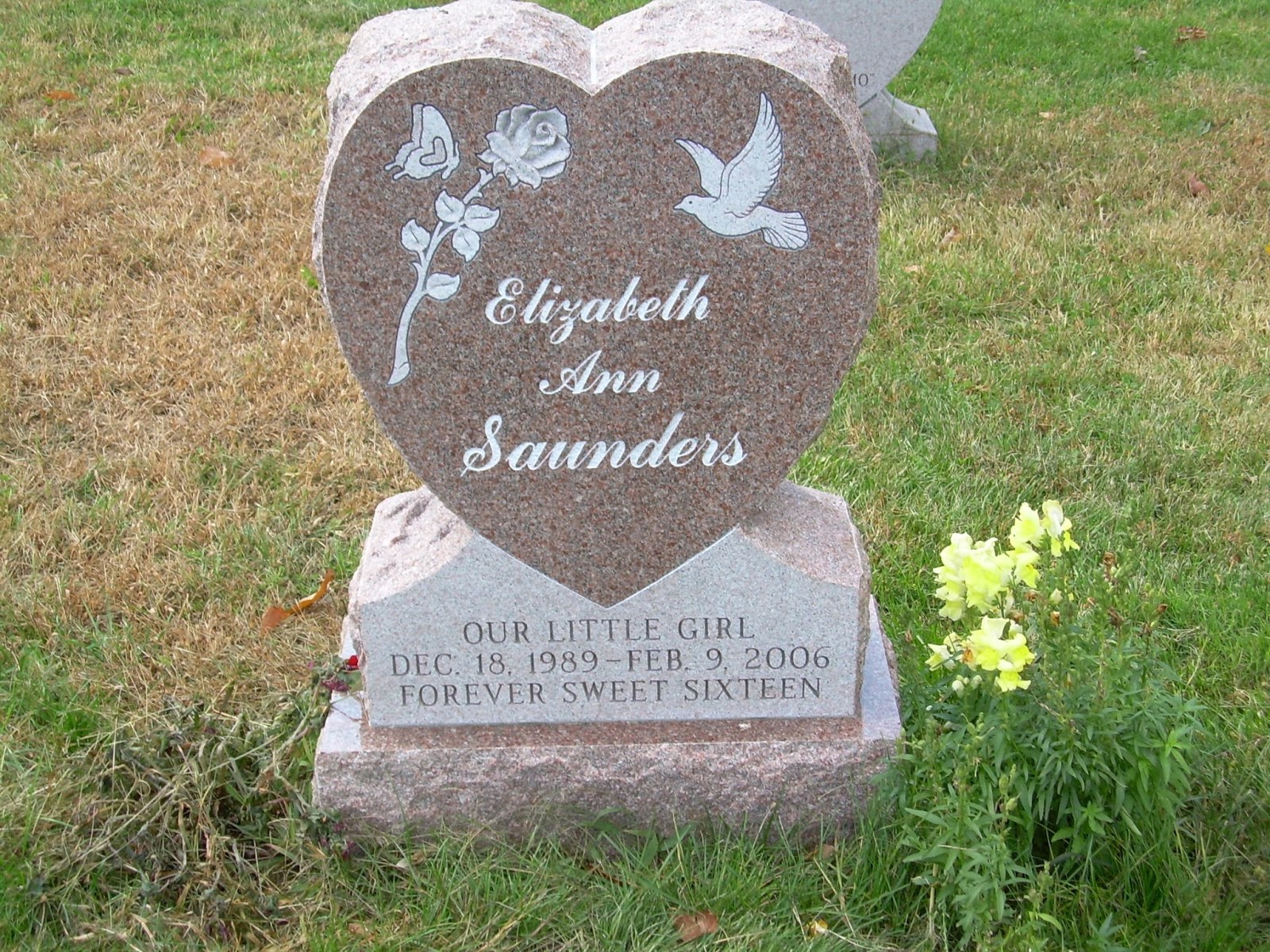
Much of my writing work since the death of my daughter Elizabeth (see her headstone) has centered around trying to raise a prevention message about congenital CMV (cytomegalovirus). It is the disease that disabled and ultimately killed her (she died during a seizure).

If interested in helping raise awareness of congenital CMV and/or encouraging women to participate in an ongoing, national treatment trial,* see below, or I would be happy to speak to you.

I try to broadcast a congenital CMV prevention message through my speaking and writing. I hope to reach my goals as the parent representative of the Congenital CMV Foundation, a local TV co-host, speaking at international congenital CMV conferences (2008, 2012) co-sponsored by the CDC, and most recently, I spoke at a conference sponsored by the Infection Control Nurses of Connecticut (April '13). My books, including my humorous and historical travel memoir, Mystic Seafarer's Trail, reveal my desire to become thin and famous like Amelia Earhart so people will listen to my CMV prevention message; and Anything But a Dog! The perfect pet for a girl with congenital CMV, about my disabled daughter growing up beside her tomboy sister and a lazy, old devoted canine (it includes interviews with the country's leading congenital CMV experts and raises funds for CMV research if purchased through the National Congenital CMV Disease Registry and Research Program). In an effort to share the comfort I received from my father's fairytale after my daughter died, I published Surviving Loss: The Woodcutter's Tale, which includes comments on grieving from a Mystic based licensed clinical social worker(it's available as a free e-book at Smashwords). 

Thank you for reading this and spreading the news about CMV prevention. If you would like to speak to me personally about this disease, I will be autographing my book,
Mystic Seafarer's Trail, at Bartleby's Café in downtown Mystic on Saturday, June 1, 9 am - Noon.

Sincerely,
Lisa Saunders
Mystic, CT 06355
saundersbooks@aol.com
Lisa's congenital CMV blog:
http://congenitalcmv.blogspot.com/"

*If interested in the national treatment trial, please contact: Brenna Anderson, M.D., M.Sc., Women & Infants Hospital of RI, banderson@wihri.org, 401-274-1122 ext. 7456. See the following recent news clip that highlights another child disabled by congenital CMV, the ongoing national clinical trial seeking the benefits of a particular treatment, and another mother's work to raise awareness: Clinical trial puts congenital CMV in spotlight for pregnant women ...


Tuesday, April 30, 2013

Media: Please help stop #1 Birth Defects Virus--Congenital CMV (cytomegalovirus)


Dear Reporters/Newcasters,
 
Much of my writing work since the death of my daughter (pictured on left) has centered around trying to raise a prevention message about congenital CMV (cytomegalovirus). It is the disease that disabled and ultimately killed my daughter (she died during a seizure). It causes more disabilities than Down syndrome, yet very few women of child-bearing age have heard about it or know how to prevent it.
If interested in helping raise awareness of congenital CMV (and/or encouraging women to participate in an ongoing, national treatment trial,* I would be happy to speak to you. The following is my short bio, which  includes my work to broadcast a congenital CMV message through speaking and writing:
Lisa Saunders lives in Mystic, Connecticut, with her husband and beagle/basset hound. A local TV co-host, she is the parent representative of the Congenital CMV Foundation and speaks at the international congenital CMV conferences (2008, 2012) co-sponsored by the Centers for Disease Control and Prevention (CDC). Most recently, she spoke at a conference sponsored by the Infection Control Nurses of Connecticut (April '13). Lisa is a part-time history interpreter at Mystic Seaport, a Cornell University graduate, and the author of several books, including her humorous and historical travel memoir, Mystic Seafarer's Trail, where she reveals her desire to become thin and famous like Amelia Earhart so people will listen to her CMV prevention message; and Anything But a Dog! The perfect pet for a girl with congenital CMV, about her disabled daughter growing up beside her tomboy sister and a lazy, old devoted canine (it includes interviews with the country's leading congenital CMV experts and raises funds for CMV research if purchased through the National Congenital CMV Disease Registry and Research Program). In an effort to share the comfort she received from her father's fairytale after her daughter died, she published Surviving Loss: The Woodcutter's Tale, which includes comments on grieving from a Mystic based licensed clinical social worker (it's available as a free e-book at Smashwords). Her other books include the Civil War book and play, Ever True: A Union Private and His Wife, and her children's novel, Ride a Horse Not an Elevator.
Lisa maintains the congenital CMV blog at: http://congenitalcmv.blogspot.com/
A recent newsclip highlights another child disabled by congenital CMV, the ongoing national clinical trial seeking the benefits of a particular treatment, and another mother's work to raise awareness:
Clinical trial puts congenital CMV in spotlight for pregnant women ...

*If interested in highlighting the national treatment trial, please contact: Brenna Anderson, M.D., M.Sc., Women & Infants Hospital of RI, banderson@wihri.org, 401-274-1122 ext. 7456
 
Thank you for your time.

Sincerely,
Lisa Saunders
Mystic, CT 06355

Tuesday, April 23, 2013

When Will Pregnant Women Hear the Truth?


Pregnant women love to hear they shouldn't be changing the kitty litter, but will they love to hear the inconvenient truth about something else they shouldn't be doing? That there is another infection that needs to be avoided when pregnant--one that causes more disabilities than Down syndrome?

Congenital CMV (cytomegalovirus) is the number one viral cause of birth defects, yet few women have heard of this common virus. Why? Because few peope want to tell them they can catch it from their beloved toddlers--that the very act of kissing them on the mouth may just be the kiss of death and/or disability for their unborn child.

I’m a mother who didn’t know about CMV prevention until it was too late for my daughter Elizabeth (I ran a daycare center for young children and had a toddler of my own). Elizabeth was born severely disabled by congenital CMV in 1989. The moment I saw her, I felt a stab of fear— her head was so small, so deformed. The neonatologist said, “If she lives, she will never roll over, sit up or feed herself.” He was right. By her 16th birthday, Elizabeth had survived several bouts of pneumonia, seizures and major surgeries. Weighing only 50 pounds, she looked odd to strangers, but her cheerful, soul-capturing smile made her lovely to my husband and me. Two months later, she died during a seizure.

I am the parent representative of the Congenital CMV Foundation and have spoken at two international Congenital CMV Conventions organized by the Centers for Disease Control and Prevention (CDC). After my first talk in 2008 in Atlanta, GA, mothers approached me afterwards holding their young children wearing hearing aids, or pushing them in wheelchairs. They all wanted to know the same thing: "Why didn’t my OB/GYN warn me about CMV?"

Fewer than half (44%) of OB/GYNs surveyed by the American College of Obstetricians and Gynecologists (ACOG) in 2007 reported having counseled their patients how to prevent CMV infection despite these figures from the CDC:

• Every hour, congenital CMV causes one child to become disabled

• Each year, about 30,000 children are born with congenital CMV infection

• About 1 in 750 children is born with or develops permanent disabilities due to CMV

• About 8,000 children each year suffer permanent disabilities caused by CMV (See: http://www.cdc.gov/cmv/index.html).

According a 2006 survey reported in the article, "Knowledge and Awareness of Congenital Cytomegalovirus Among Women," of the 643 women surveyed about their CMV awareness, only 22% had heard of it and most of those could not correctly identify modes of CMV transmission or prevention.

Why don't OB/GYNs routinely warn their patients? An OB/GYN quoted in FitPregnancy magazine (June/July '08) said, "The list of things we're supposed to talk about during women's first visit could easily take two hours and scare them to death.”

In addition, many OB/GYNs don't realize the prevalence of congenital CMV. In the article, “Washing our hands of the congenital cytomegalovirus disease epidemic,” Drs. Cannon and Davis state: “The virtual absence of a prevention message has been due, in part, to the low profile of congenital CMV. Infection is usually asymptomatic in both mother and infant, and when symptoms do occur, they are non-specific, so most CMV infections go undiagnosed.”


"Primary infection during pregnancy accounts for over 90% of severely affected babies and approximately 75% of women with a primary infection during pregnancy acquire CMV from their own child under two years of age,” said Stuart Adler, M.D., Professor of Pediatrics, Microbiology and Medicine and Director of Infectious Diseases at the Children’s Medical Center, Virginia Commonwealth University Medical Center. Dr. Adler has specialized in CMV infections among women and children for over 28 years and has published extensively on this topic.

Despite these statistics, according to the CDC, "CMV does not spread easily. Less than 1 in 5 parents of children who are shedding CMV become infected over the course of a year...In the United States, approximately 30-50% of women have never been infected with CMV. About 1-4 of every 100 women who have never been infected with CMV have a primary (first) CMV infection during pregnancy. About one third of women (33 of every 100) who become infected with CMV for the first time during a pregnancy will pass the infection to their infant."

The direct costs of caring for CMV-disabled children are estimated at $1-$2 billion annually.

Between 50% and 80% of adults in the U.S. are infected with CMV by 40 years of age. During pregnancy, there are steps one can take to reduce changes of contracting CMV, such as talking to your doctor if you expect to receive a blood transfusion. Most blood banks don’t screen blood for CMV.

Daycare workers and mothers of young children should take these special precautions:

  1. wash your hands thoroughly after contact with urine or saliva
  2. avoid oral contact with saliva or objects covered with saliva (such as cups, pacifiers, toys, etc.)
  3. talk with your doctor about whether you should continue to work in a day care center.
  4. 4. Clean toys, countertops, and other surfaces that come into contact with children’s urine or saliva

I am asking the public for advice on how I can reach people who work in daycare centers or have a child enrolled in one. Some centers post flyers mentioning the need for careful hygiene when working with young children--but not many. Until OB/GYNs (and pediatricians) make it a standard practice of care to educate women of childbearing age on CMV prevention, I feel the public needs to do something.

Mothers of children affected by congenital CMV are so upset the medical community didn't find a way to warn them of the precautions to take so they could make up their own minds if they still wanted to share a mouth kiss with their toddlers or work in daycare centers with children under the age of two and a half. I believe knowing the precautions to take after wiping a runny nose or picking up toys covered in saliva can help prevent the kind of suffering my daughter Elizabeth endured.
The medical community is working on a vaccine and there is also a study currently underway to see if receiving CMV hyperimmune globulin (HIG) will prevent congenital CMV infection. They are looking for women who would like to be tested for the disease.

I received the following e-mail from the Study Chair for a 14-center NICHD Maternal Fetal Medicine Units Network (MFMU) randomized clinical trial testing the efficacy and effectiveness of hyperimmune globulin for prevention of congenital CMV in women with primary infection:

Cytomegalovirus (CMV) is the most common congenital infection, with a prevalence of approximately 1% in the United States, translating into 44,000 congenitally infected infants per year. A substantial proportion of these 44,000 infants will die or suffer permanent injury as a result of their infection. The severity of congenital infection is greatest with primary maternal CMV infection.

Currently, there is no proven method of preventing congenital CMV infection, and the approach to primary maternal CMV infection in the United States is haphazard and ineffective. One small, non-randomized study suggests that maternal administration of CMV hyperimmune globulin may reduce the rate of congenital CMV infection following maternal primary infection.
or contact:
Brenna Anderson, M.D., M.Sc.
Women & Infants Hospital of RI
101 Dudley Street
Providence, RI 02905
401-274-1122 ext. 7456

For more information about congenital CMV:

CDC site on congenital CMV: http://www.cdc.gov/cmv/index.html

CDC brochure discusses blood transfusions and working with young children: http://congenitalcmv.org/CDCbrochure.pdf

An article written by doctors I found very enlightening:

I am listed on the Congenital Cytomegalovirus Foundation site along with the doctors who specialize in Congenital Cthey are all willing to speak to you. Their e-mail address is linked to their name: http://www.congenitalcmv.org/foundation.htm

About me, Lisa Saunders:

Lisa Saunders lives in Mystic, Connecticut, with her husband and beagle/basset hound. A Cornell University graduate, Saunders is the parent representative of the Congenital CMV Foundation and speaks at international congenital CMV conferences ('08,'12) sponsored by the Centers for Disease Control and Prevention (CDC), Congenital CMV Foundation, and the National Congenital CMV Disease Registry. Most recently, she spoke at a conference sponsored by the Infection Control Nurses of Connecticut (April '13). Lisa is a consulting writer for Rockland Community College of New York, part-time history interpreter at Mystic Seaport, and the author of several books, including her humorous and touching memoir about her CMV-disabled daughter growing up beside her tomboy sister and a lazy, old devoted canine, Anything But a Dog! The perfect pet for a girl with congenital CMV. the book includes interviews with the country's leading congenital CMV experts and raises funds for CMV research and parent support if purchased through the The National Congenital CMV Disease Registry and Research Program. Saunders also raises congenital CMV awareness in her humorous and historical book, Mystic Seafarer's Trail, where she reveals her desire to become thin and famous like Amelia Earhart so people will listen to her CMV prevention message. In an effort to share the comfort she received from her father's fairytale after her daughter died from complications of congenital CMV, she also published Surviving Loss: The Woodcutter's Tale, which, in addition to raising congenital CMV awareness, includes comments on grieving from a licensed clinical social worker (it's available as a free e-book at: https://www.smashwords.com/books/view/283862
Lisa maintains the congenital CMV blog at: http://congenitalcmv.blogspot.com/
See Lisa on her two-minute USA 9 news interview about CMV at: http://www.wusa9.com/video/34235723001/1/Coping-With-CMV
 
To read about Lisa's CMV awareness work along with advice from internationally known CMV experts, visit the Times Herald Record article: www.recordonline.com/apps/pbcs.dll/article?AID=/20090121/HEALTH/901210313
For more information about Lisa's work, visit www.authorlisasaunders.com or contact her directly at saundersbooks@aol.com