Wednesday, March 15, 2023

Why add cytomegalovirus (CMV) to the OSHA Bloodborne Pathogens Standard

(Illustration from the Woodcutter's Tale by Marianne Greiner. Coloring by Suzanne Doukas Niermeyer)


Caregivers/teachers regularly bandage bloody cuts. 
Cytomegalovirus (CMV), the leading viral cause of birth defects, is transmitted through bodily fluids such as saliva, urine and blood.

I, along with others before me, have asked OSHA if they can add CMV to its bloodborne pathogens standard, because then, "employers having employees with exposure to blood or other potentially infectious materials (OPIM) must train employees annually regardless of the employees' prior training or education" (Standard Interpretations, 2007). 


Despite OSHA recognizing CMV as a hazard to childcare workers on its webpage at: https://www.osha.gov/cytomegalovirus/hazards, I know from personal experience that most child care providers are unaware of their occupational risk for congenital CMV (www.cdc.gov/cmv/index.html).

Although I was a licensed, in-home child care provider at the time of my pregnancy with Elizabeth, born with congenital CMV in 1989, I was not educated about the virus. When I learned about CMV after receiving Elizabeth’s diagnosis, my head spun. I thought I lived in a country that told its workers about their occupational hazards. Elizabeth’s brain was small and damaged. She had deafness, blindness, mental challenges, cerebral palsy and epilepsy. She died during a seizure in 2006.

Shockingly, years later, child care providers are still unaware of CMV. In 2012, I received an email from a distressed grandmother about her grandson just born with congenital CMV. The baby's mother was a high school student interning in a daycare center. The young mother, just like me decades earlier, was unaware she was putting her pregnancy at increased risk by working with young children. When I visited the family in the hospital, the attending nurse asked me, "Knowing what you do about CMV, why haven’t you launched an awareness campaign?" I explained to her that I've been trying for years--with little, long-term result. 

Between 8 - 20% of child care providers contract CMV every year (American Academy of Pediatrics 2017) as compared to 1-4% of women (who have never had CMV) in the general population (CDC). Recent studies show that child care providers are largely unaware of CMV and many acknowledge using diaper wipes to clean (Thackeray and Magnusson, 2016). Diaper wipes do not effectively remove CMV from hands (Stowell et al., 2014).  

Most caregivers/teachers are still unaware of CMV because:

1) Although OSHA lists CMV as a "Recognized Hazard", there are no federal laws governing CMV education policies for child care workers. The Department of Labor states, "Education and training requirements vary by setting, state, and employer." 

2) CMV education is not "part of standard prenatal care” (Washington Post, 2021);


3) Doctors don’t want to frighten, worry or “burden” patients (New York Times, 2016);


4) CMV is a “silent virus” that goes largely undiagnosed--"The virtual absence of a prevention message has been due, in part, to the low profile of congenital CMV. Infection is usually asymptomatic in both mother and infant, and when symptoms do occur, they are non-specific, so most CMV infections go undiagnosed.” (Washing our hands of the congenital cytomegalovirus disease epidemic, Cannon and Davis, 2005).


5) Medical training downplays the dangers. Michigan pediatrician Megan Pesch, MD, was shocked when her third daughter was born with congenital CMV. She stated that  "many health-care providers tend to minimize or ignore the risks." She said, "I went back and looked at my notes at what I’d learned in residency and medical school, and what we learned was so rudimentary and basic...”(Washington Post, 2021).


It pains me that caregivers/teachers are slipping through the cracks--that their unborn children are not benefitting from the Occupational Safety and Health Act of 1970. Most workers in the childcare industry are not receiving their right to “receive information and training about hazards”. Their babies are paying the price for this neglect.


Please take a moment to "meet" these two mothers living near me who had no other children at the time of their pregnancy, but because of their professions, were unknowingly at increased risk for CMV. I met them at the June 2021 Cytomegalovirus Awareness Month event in central New York where we placed over 220 silver rocks (the color of CMV awareness) on the Trail of Hope (Buchiere, 2021) to honor the estimated number of babies born disabled by congenital CMV in New York each year.  You can watch Autumn (born with congenital CMV in 2015), the beautiful daughter of Kristin Schuster of Canandaigua, "help" us with the rocks in the music video,  "Had I Known (about CMV)". Autumn's mother, Kristin, stated that her "risk for contracting CMV came through her former job as a pre-kindergarten teacher when she was pregnant with her daughter Autumn" (Vallelunga, 2022). Jessica Keukelaar of Macedon watched us place the rocks with her first child Kyleigh, born with congenital CMV in 2018. 


Like Kristin and myself, Jessica worked with young children during her pregnancy and was unaware of her occupational risk for CMV. In support of a New York law to educate child care providers about CMV, she wrote a letter to Assemblymember Rosenthal’s office stating, “I was a caregiver in a daycare center when I became pregnant with my daughter born with congenital cytomegalovirus (CMV)... I had never heard of CMV or the precautions to take. This bill [Elizabeth’s Law] is important to me because it came as a complete shock when my daughter was born full term, in 2018, with numerous urgent health issues due to CMV. She was transferred to a different hospital to be in the NICU where she spent the first two weeks of her life; she was very ill. My daughter has developmental delays, spastic cerebral palsy which affects her entire body, eating and digestive difficulties, progressive hearing loss, microcephaly, and more. Some of the extra equipment Kyleigh requires on a daily basis are, a wheelchair due to immobility, gastrostomy tube for proper nutrition, cochlear implant for hearing, and special orthotics for her hands, wrists, ankles, and feet. She had surgery for her cochlear implant at 17 months, a double hip reconstruction at two years, and surgery to have her g-tube placed at three years. She also takes numerous medications several times per day, and receives 11 Botox injections quarterly to help with her spasticity. Congenital CMV has affected every aspect of Kyleigh’s life, as well as our whole family. I wish that someone took the time to educate me about CMV since I was at an increased risk of infection ”( Jessica's Memo in Support of “Elizabeth’s Law” 2022). 


In 2022, we three moms, former caregivers/teachers, helped New York pass the CMV education bill, "Elizabeth's Law", named in memory of my daughter. Although it is now required for child care providers to receive printed information about CMV (NYAssembly.gov, 2022),  they are still not required to receive actual training on this recognized "hazard”.  I think it's important to recognize the significance of this statement made in 2022: "Childcare workers, but not healthcare workers, have an increased risk of prevalent and incident CMV infection, a risk that is further increased with the presence of at least one child living at home. These findings suggest that enforcing simple, conventional hygienic measures in childcare settings could help reduce transmission of CMV, and that special precautionary measures for preventing CMV infection may not be required for pregnant healthcare workers."(Prevalence, incidence, and risk factors associated with cytomegalovirus infection in healthcare and childcare worker: a systematic review and meta-analysis, Balegamire et al.,2022)


If training incurs additional costs, it is also important to consider the medical care costs of NOT preventing congenital CMV: "Congenital CMV-related sequelae affect over 5000 children annually, and costs are greater than $1 billion annually in direct medical care in the United States" (Kabani, 2020). Of course there are other costs to congenital CMV, such as lost wages, the cost of providing specialized education, etc. Another estimate: "at least 3000 [newborns] are estimated to develop permanent neurologic disabilities each year due to cCMV infection...With an estimated annual cost of up to $4 billion in the United States, cCMV infection is an enormous public health concern..." ("Cost-effectiveness of Universal and Targeted Newborn Screening for Congenital Cytomegalovirus Infection" (Gantt, S, 2016). 


OSHA's CMV Hazard Recognition page, https://www.osha.gov/cytomegalovirus/hazards, states, "To help prevent CMV infections, employers and workers should treat all body fluids as if they are potentially infectious with CMV and follow the precautions described in the Control and Prevention page. Depending on workers’ job tasks and exposures, this may include following universal precautions as required in OSHA's Bloodborne Pathogens (BBP) standard (29 CFR 1910.1030), as well as standard precautions, which expand universal precautions beyond what the BBP standard requires." 


According to the OSHA webpage, Cytomegalovirus - Standards | Occupational Safety and Health Administration (osha.gov):

This section highlights OSHA standards and directives (instructions for compliance officers) and other related information that may apply to possible worker exposure to cytomegalovirus (CMV).

OSHA Standards

There is no specific OSHA standard covering CMV. However, there are some OSHA standards that may apply to preventing occupational exposure to sources of CMV.

  • OSHA's Personal Protective Equipment (PPE) standards (29 CFR 1910 Subpart I), which include requirements for when employees must use gloves and eye and face protection, may apply to protecting workers from CMV.
  • OSHA's Bloodborne Pathogens (BBP) standard (29 CFR 1910.1030) applies to occupational exposure to human blood and other potentially infectious materials. The BBP standard applies to occupational exposure to some human body fluids, including blood and saliva in dental procedures, which can transmit CMV. The BBP standard also describes measures could serve as a framework to control non-bloodborne exposures, including to body fluids such as urine, feces, and saliva (except in dental procedures) to which the standard does not apply.


Thank you for your attention to this serious matter.


Sincerely, 


Lisa Saunders

LisaSaunders42@gmail.com

216 Peakwood Ln, Apt 15

Baldwinsville, NY 13027

New York Stop CMV

About Lisa's CMV work

Friday, March 10, 2023

Free Ways to Educate Pregnant Women About Preventing #1 Birth Defects Virus, CMV


Cost of NOT preventing congenital CMV: "at least 3000 [newborns] are estimated to develop permanent neurologic disabilities each year due to cCMV infection...With an estimated annual cost of up to $4 billion in the United States, cCMV infection is an enormous public health concern..." ("Cost-effectiveness of Universal and Targeted Newborn Screening for Congenital Cytomegalovirus Infection" (Gantt, S, 2016). 


1)  Ask the Commissioner of  Health to upload the free CMV educational materials to the Department of Health Website. The CDC, AAP and Medscape have great materials.  If materials are from the CDC, they don't seem to have to go through an approval process. 

Medscape, which offers free professional online education and CME (Continuing Medical Education) to physicians and healthcare professionals, now works to advance awareness of congenital CMV. Gail J. Demmler-Harrison, MD can be seen introducing its new CMV program: “As chair of the steering committee, I’d like to welcome you to Clinical Advances in Cytomegalovirus or CMV, a comprehensive learning center for clinicians who treat patients with CMV or who treat patients who are at risk for CMV…” (medscape.org/sites/advances/cmv). Dr. Demmler-Harrison told Saunders, “This is just the first of many CME educational programs Medscape has planned. Check back often for new programs!" 

2) Ask legislators to ask doctors who provide prenatal care to distribute information about CMV prevention (CT DPH website has letter: “About CMV For Obstetric Health Care Providers”. It needs to be written in statute, similar to Iowa law, “An attending health care provider shall provide to a pregnant woman during the first trimester of the pregnancy the informational materials published under this subsection. The center for congenital and inherited disorders shall make the informational materials available to attending health care providers upon request.

3) Distribute links to fliers to doctors and child care providers through association newsletters.  


4) Ask student interns to create materials especially for child care providers. Although the CT DPH has info for child care providers (see: https://portal.ct.gov/DPH/Family-Health/EHDI/CMV), it doesn't have a flyer specifically for child care providers. 


I asked CT DPH: 

As you may be aware, the  Cytomegalovirus education  bill is now Raised H.B. No. 6821: AN ACT 

CONCERNING EDUCATION REGARDING CYTOMEGALOVIRUS, which only requires CMV info on the DPH website. Commissioner of Health, Manisha Juthani, MD, stated in her letter of testimony: "DPH currently maintains a website, portal.ct.gov/DPH/Family-Health/EHDI/CMV, that provides information on symptoms, diagnosis, and treatment of cytomegalovirus. We are happy to work with practitioners and community providers if they would like additional information on cytomegalovirus to be added to the website..."
  • 3/06/2023 Juthani, Manisha, Commissioner-Department of Public Health-
 
Commissioner of Health, Manisha Juthani, MD, dph.commissioner@ct.gov

ADD:

UCONN students created a CMV training video for child care providers. 
  • CMV Training Module for child care providers (University of Connecticut):https://youtu.be/k9MFAEYVuLs
  • CDC flyers in English and Spanish:https://www.cdc.gov/cmv/resources/pregnant-women-parents.html
  • Recommendations from the AAP for caregivers/teachers at:http://nrckids.org/CFOC/Database/7.7.1.1. "Staff Education and Policies on Cytomegalovirus (CMV)," American Academy of Pediatrics, American Public Health Association, National Resource Center for Health and Safety in Child Care and Early Education. (Revised 2017). National Health and Safety Performance Standards: Guidelines for Early Care and Education Programs. Retrieved from Caring for Our Children

CT DPH currently have this for child care providers: 
For Childcare Providers and Pediatrics Professionals:


Due to frequent contact with young children, childcare providers and other pediatric professionals, may be at greater risk for CMV.  According to the National CMV Foundation,  “Contact with infected bodily fluids, including saliva or urine of young children, is a major cause of CMV infection among pregnant women –  especially mothers, daycare workers, preschool teachers, therapists, and nurses. Studies in childcare settings suggest that as many as 75% of toddler-aged children have CMV in their urine or saliva, and viable CMV can persist on hands for at least 15 minutes.” Following standard hygiene practices mentioned above may help prevent the spread of CMV.


*)Ask CDC to include child care workers on its list of occupations affected by bloodborne pathogens since they bandage up cuts/scrapes: https://www.cdc.gov/niosh/topics/bbp/occupations.html. 

 "Under OSHA's bloodborne pathogens standard, employers having employees with exposure to blood or other potentially infectious materials (OPIM) must train employees annually regardless of the employees' prior training or education" (Standard Interpretations, 2007). I, and others, have contacted OSHA, asking them to put CMV on their official bloodborne pathogen list, because then it means that child care providers across the country will receive training in CMV.

CMV info should be a part of bloodborne pathogens/universal precautions training for child care providers since they must bandage cuts and handle blood. Their CMV Hazard Recognition page indicates rationale for why it could be included, yet it is not a requirement: https://www.osha.gov/cytomegalovirus/hazards 

Cytomegalovirus - Standards | Occupational Safety and Health Administration (osha.gov)

  • OSHA's Personal Protective Equipment (PPE) standards (29 CFR 1910 Subpart I), which include requirements for when employees must use gloves and eye and face protection, may apply to protecting workers from CMV.
  • OSHA's Bloodborne Pathogens (BBP) standard (29 CFR 1910.1030) applies to occupational exposure to human blood and other potentially infectious materials. The BBP standard applies to occupational exposure to some human body fluids, including blood and saliva in dental procedures, which can transmit CMV. The BBP standard also describes measures could serve as a framework to control non-bloodborne exposures, including to body fluids such as urine, feces, and saliva (except in dental procedures) to which the standard does not apply.

*) I just asked the Red Cross the following: Thank you for your information on cytomegalovirus

I understand that blood-collecting folks tell donors WHY they are happy if a donor is CMV-negative. Is there any way you can help provide more information, like handing out a flier  to everyone about CMV, not to just those who are negative?

Women of childbearing age are not told about CMV, the leading viral cause of birth defects. As you may be aware, 1 in 200 babies is born with congenital CMV (my daughter was one of them and lived for 16 years with a severely damaged brain).

Here is an excerpt from a recent article that illustrates what I'm talking about: "One afternoon, a technician looked at my blood-donor card and pointed out the three letters with a minus sign typed on the bottom right. "How wonderful!" he said. "Your blood can be donated to preemies!" It meant I'd never contracted CMV...I was proud that my blood could help newborns — but looking back, I wish I'd understood that it also meant I should try to avoid CMV if I ever became pregnant. Eventually, my son was on the receiving end of those blood donations because of challenges that had been preventable."
 "My son was born sick from a virus he caught in utero. He's now 10 and has several disabilities" JACLYN GREENBERG,
 March 7, 2023: https://africa.businessinsider.com/health/my-son-was-born-sick-from-a-virus-he-caught-in-utero-hes-now-10-and-has-several/5bfd2v3

 *) Find one catchy phrase to get out on social media, such as "don't share you pacifier", etc., to get it as known as the kitty litter virus (even though toxoplasmosis is contracted other ways, the kitty litter thing at least gets one thinking about it).  Examples: #ReduceYourRisk, Save pregnancy from CMV, etc


Thursday, March 2, 2023

Newborns with symptomatic and asymptomatic congenital cytomegalovirus (CMV)


I am not a doctor, so I collected fliers, web content and opinions to consider: 


FROM THE NATIONAL CMV FOUNDATION:

Next Steps After a CMV Diagnosis

Next Steps After a CMV Diagnosis

MINNESOTA

Minnesota now tests ALL newborns for CMV and makes the following recommendations for those diagnosed with congenital CMV: Congenital Cytomegalovirus--Overview 

https://www.health.state.mn.us/people/newbornscreening/program/cmv/index.html

Congenital Cytomegalovirus Frequently Asked Questions

Information specific for families: 

https://www.health.state.mn.us/people/newbornscreening/program/cmv/faq.html


OPINIONS FROM EXPERTS

1) Asymptomatic congenital cytomegalovirus (CMV)

"If an infant is known to have passed the newborn hearing screen but has tested positive for CMV, the most recent JCIH [Joint Committee on Infant Hearing] statement recommends a full pediatric audiology evaluation by 3 months of age and then future monitoring “every 12 months to age 3 or at shorter intervals based on parent/provider concerns," stated Brenda K. Balch, MD, American Academy of Pediatrics Early Hearing Detection & Intervention Connecticut Chapter Champion (CMV - An often unknown cause of hearing loss, 2019). 

Another opinion: Dr. Gail Demmler-Harrison said, "I actually suggest every 6 months for 3 years, then annually thereafter, or soon if concerns" (Feb. 2023)


2) Symptomatic congenital cytomegalovirus (CMV)

General opinion relevant to any state: "A newborn or infant diagnosed with congenital CMV infection should be seen/evaluated/consulted by an expert in pediatric infectious diseases.  These experts may be found at most children's hospitals and major medical centers. While most babies with congenital CMV infection have no symptoms, and will not experiencer long term consequences, some infants do have disease and sequelae from congenital CMV, so it is important to have the baby fully evaluated as early as possible, to see if they meet criteria for antiviral treatment and/or special monitoring. All babies, whether symptoms or not, are at risk for hearing loss, and this hearing should always be monitored carefully in all babies born with congenital CMV infection. Hearing can be monitored by a pediatric audiologist or a pediatric otolaryngologist/ENT specialist, or the baby's pediatrician."


Saturday, February 11, 2023

Including children with known congenital CMV in New York

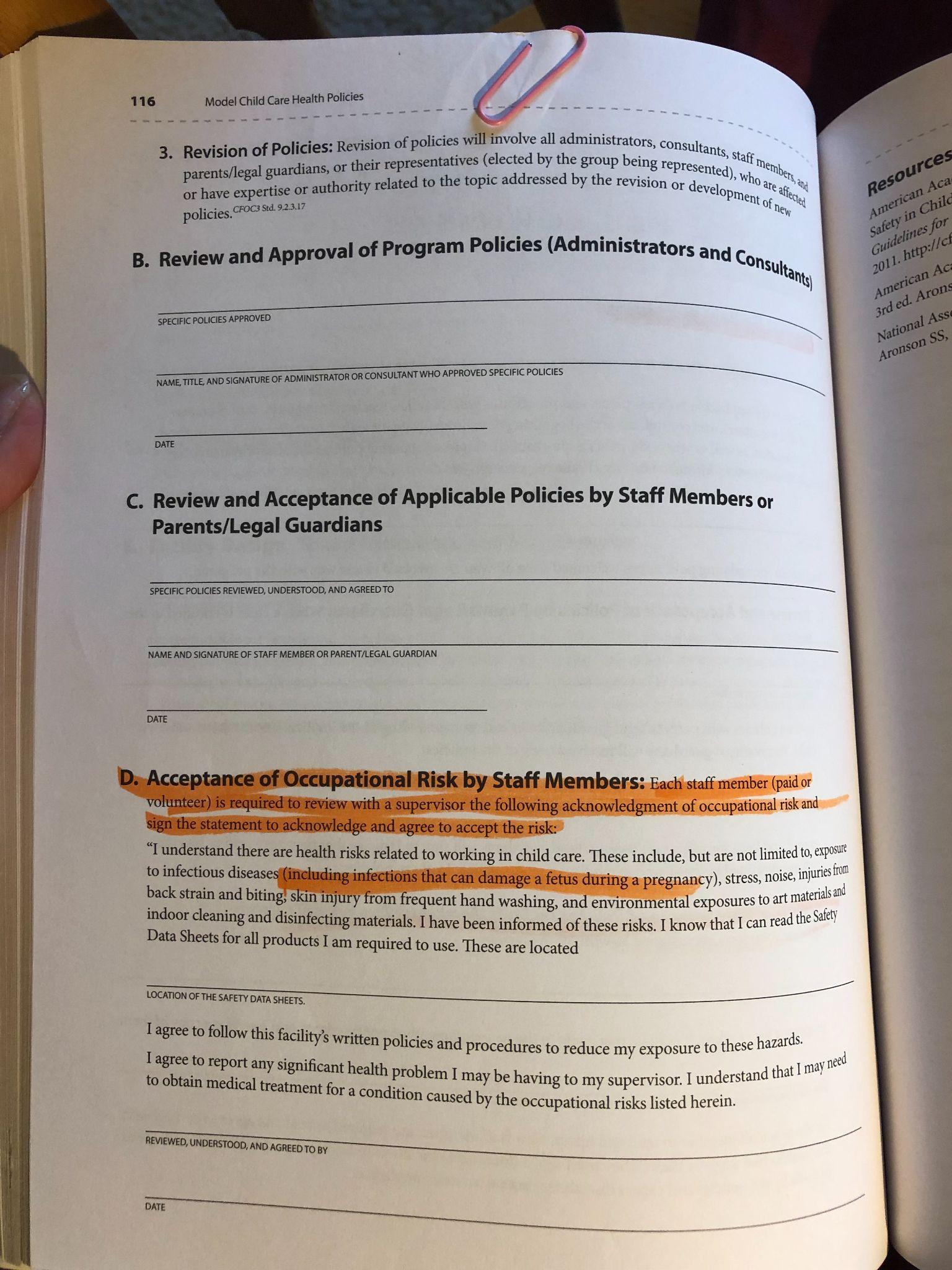
Page 116 - Model Child Care Health Policies, published by the American Academy of Pediatrics, recommends staff members acknowledge and accept “Occupational Risk” of working in child care “including infections that can damage a fetus during pregnancy” 


NEW LAW IN NEW YORK

Did you know about the new law aimed at educating child care providers and pregnant women about cytomegalovirus (CMV), the leading viral cause of birth defects?


I am a CMV advocate (but not a doctor). However, I and can help direct you to more information. If you don't know what congenital CMV is, or about the new law named "Elizabeth's Law," in memory of my daughter,  I suggest reading: 


Once child care providers learn about CMV, their increased risk and need to carefully follow infection control policies, or learn there is a known case of congenital CMV in their group, they may be wondering if they should work with that child. 

According to the National CMV Foundation: "Precautions for Caregivers: Contact with infected bodily fluids, including saliva or urine of young children, is a major cause of CMV infection among pregnant women –  especially mothers, daycare workers, preschool teachers, therapists, and nurses. Studies in childcare settings suggest that as many as 75% of toddler-aged children have cmv in their urine or saliva, and viable CMV can persist on hands for at least 15 minutes. Per the AAPs 2015 Red Book recommendations for CMV, which states that healthcare workers, even when pregnant, do not need to exclude children with CMV, as up to 80% of asymptomatic children are shedding CMV at any time. Universal precautions are enough to minimize exposure." Learn more at: https://www.nationalcmv.org/resources/for-childcare-providers and/or see their flier, "Should I Exclude a Child Born With CMV?"

Caregivers/teachers should be referred to their primary care doctor or health department  for counseling about their risk of CMV infection per the guidelines in Caring for Our Children: 7.7.1.1: Staff Education and Policies on Cytomegalovirus (CMV), which states: 

Cytomegalovirus (CMV) is a viral infection that is common in children. Up to 70% of children ages 1 to 3 years in group care settings excrete the virus (1).
Staff of childbearing age who care for infants and children should be provided the following information:

  1. The increased probability of exposure to cytomegalovirus (CMV) in the child care setting;
  2. The potential for fetal damage when CMV is acquired during pregnancy;
  3. The importance of hand hygiene measures (especially handwashing and avoiding contact with urine, saliva, and nasal secretions) to lower the risk of CMV;
  4. The availability of counseling and testing for serum antibody to CMV to determine the caregiver/teacher’s immune status.

Female employees of childbearing age should be referred to their primary health care provider or to the health department authority for counseling about their risk of CMV infection. This counseling may include testing for serum antibodies to CMV to determine the employee’s immunity against CMV infection.
Since saliva can transmit CMV, staff should be advised not to share cups or eating utensils, kiss children on the lips, or allow children to put their fingers or hands in another person’s mouth. 

RATIONALE
CMV is the leading cause of congenital infection in the United State and approximately 1% of live born infants are infected prenatally (1). While most infected fetuses likely escape resulting illness or disability, 10% to 20% may have hearing loss, developmental delay, cerebral palsy, or vision disturbances (1). Although maternal immunity does not entirely prevent congenital CMV infection, evidence indicates that acquisition of CMV during pregnancy (primary maternal infection) carries the greatest risk for resulting illness or disability of the fetus (2).

Children enrolled in child care facilities are more likely to acquire CMV than are children cared for at home (2). Epidemiologic data, as well as laboratory testing of viral strains, has provided evidence for child-to-child transmission of CMV in the child care setting (1). Rates of CMV excretion vary among facilities and between class groups within a facility. Children between one and three years of age have the highest rates of excretion; published studies report excretion rates between 30% and 40% (2). Many children excrete CMV asymptomatically and intermittently for years.

With regard to child-to-staff transmission, studies have shown increased rates of infection with CMV in caregivers/teachers ranging from 8% to 20% (2). The increased risk for exposure to CMV and high rates of acquisition of CMV in caregivers/teachers could lead to increased rates of congenital CMV infection. Meticulous hand hygiene can reduce the rates of infection by preventing CMV transmission. With current knowledge on the risk of CMV infection in child care staff members and the potential consequences of gestational CMV infection, child care staff members should receive counseling in regard to the risks of acquiring CMV from their primary health care provider. However, it is also important for the child care center director to inform infant caregivers/teachers of the increased risk of exposure to CMV during pregnancy (1). 

COMMENTS

For additional information regarding CMV, consult the CMV chapter in the current edition of the Red Book from the American Academy of Pediatrics (AAP).

TYPE OF FACILITY
Center, Early Head Start, Head Start, Large Family Child Care Home, Small Family Child Care Home
RELATED STANDARDS
3.6.1.1 Inclusion/Exclusion/Dismissal of Ill Children
REFERENCES
  1. Aronson, S. S., T. R. Shope, eds. 2017. Managing infectious diseases in child care and schools: A quick reference guide, 4th Edition.Elk Grove Village, IL: American Academy of Pediatrics.
  2. American Academy of Pediatrics. Cytomegalovirus (CMV) Infection In: Kimberlin DW, Brady MT, Jackson MA, Long SS, eds. Red Book: 2018 Report of the Committee on Infectious Diseases. 31st Edition. Itasca, IL:  American Academy of Pediatrics; 2018: 310-317
NOTES

Content in the STANDARD was modified on 3/31/17.

(Visit: https://nrckids.org/CFOC/Database/7.7.1.1)


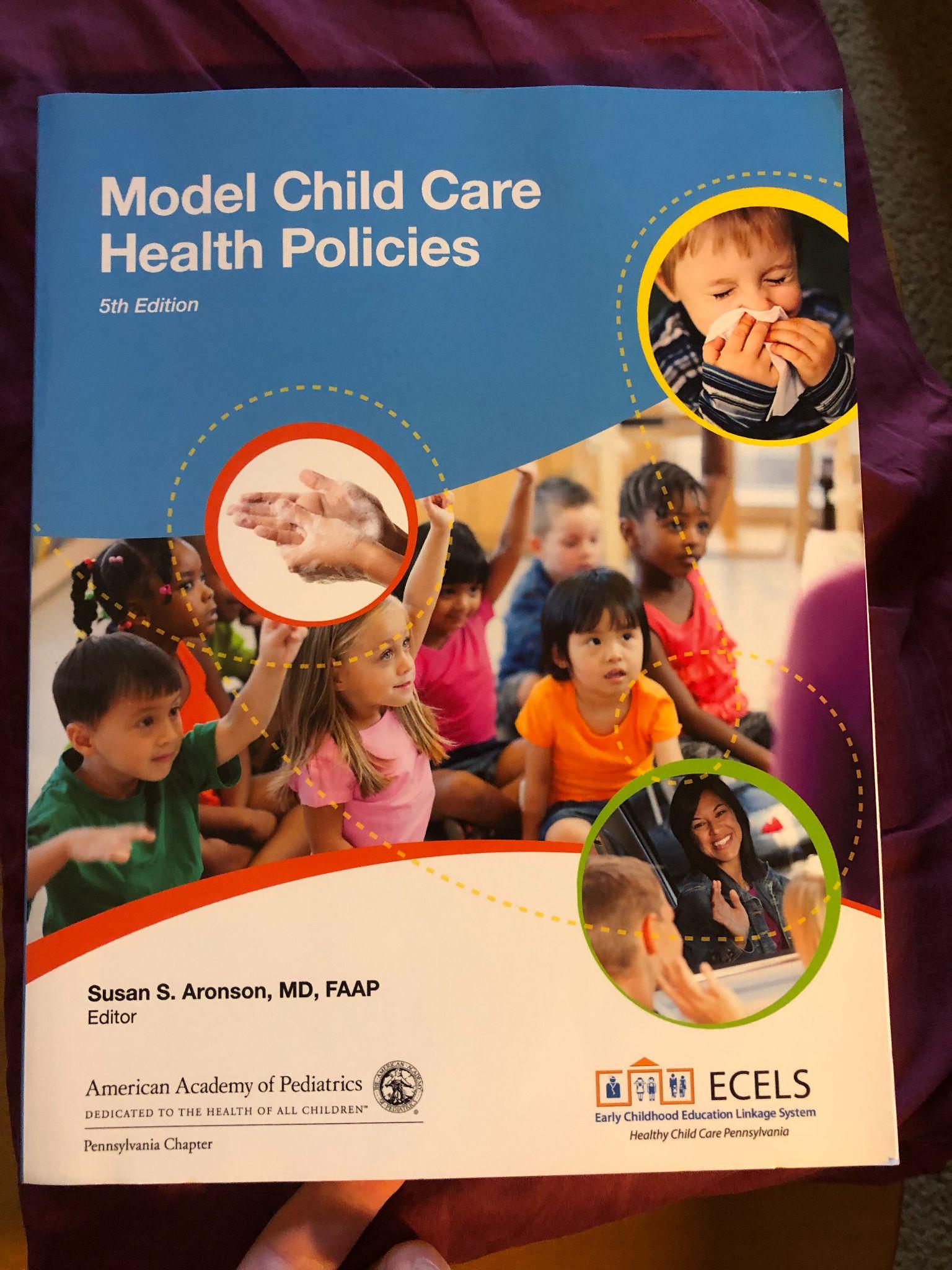
Child care licensing agencies should instruct child care centers and preschools to educate staff about CMV. The book, Model Child Care Health Policies, has a sample document to be signed by staff (paid or volunteer) to show “Acceptance of Occupational Risk by Staff Members,” which includes “exposure to infectious diseases (including infections that can damage a fetus during pregnancy)” (American Academy of Pediatrics, Pennsylvania Chapter, Aronson, SS, ed., 2014, p. 116).


NOTE:

Although I know personally of one lawsuit settled out of court in the US (so there is no record of it), I do know of these published cases involving what can happen if women are not educated about their CMV risks: 

1) Connecticut: Lawsuit featured in the article, "Couple wins $37.6 million in Superior Court ruling against UConn Health for fertility procedure that left one child dead and her twin requiring lifetime medical attention", which included the comment, “The Center for Advanced Reproductive Services did not inform Monroe-Lynch and 'knowledgeably obtain her consent' about the risks associated with a CMV infection, according to the lawsuit” (Hartford Courant, 2021). The lawyers' website states, “The devastating consequences of contracting congenital CMV infection early in pregnancy are well-known in the medical community. There are simple safeguards in place to protect prospective parents and their children from this horrible disease” (Walsh Woodard LLC, 2021). 


2) Australia: ”A Court of Appeal ruled that the child's disabilities resulted from the woman being infected with cytomegalovirus (CMV) at work (Hughes v SDN Children's Services 2002)” (WorkSafe). Lawyers commented, “The allegations of negligence were that Sydney Day Nursery breached its duty of care to Linda ...by failing to warn her of the risks of CMV in circumstances where the centre knew or ought to have known of the risks of CMV to pregnant women…”(Meridian Lawyers).