Thursday, February 15, 2018

New Book: "Help Childcare Providers Fight CMV: Protect Newborns from #1 Birth Defects Virus"


 #1 Birth Defects Virus in Childcare Centers: CMV  book reduces spread


CMV, a virus far more threatening to newborns than Zika, causes 4,000 disabled newborns each year in the U.S.
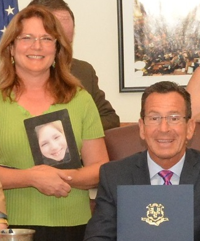
I helped Connecticut pass a CMV law in 2015 and have just come out with the book, "Help Childcare Providers Fight CMV," to protect the unborn children of mothers who use childcare services as well as the unborn children of those who provide the childcare. I am a former licensed childcare provider and mother of a toddler who was unaware of my increased risk for CMV and what to do about it.  

"Help Childcare Providers Fight CMV" retails for $6.99.  If you prefer, you can download my 133-page manuscript by clicking here. I have also created a PowerPoint for those who work in childcare. 

Please see my following press release.

Thanks!


photo 
Lisa Saunders
CMV Awareness Advocate, Parent Rep., Congenital Cytomegalovirus Foundation


IMMEDIATE RELEASE

 Childcare Providers Unaware of Occupational Risk for CMV: #1 Birth Defects Virus

 "Help Childcare Providers Fight CMV by Lisa Saunders, former licensed childcare provider and mother of daughter born disabled by congenital CMV

Includes lyrics to new song, "Had I Known (about CMV)" © 2018 DebraSong Publishing

Mystic, Conn.--Childcare providers are largely unaware they have an occupational risk for cytomegalovirus (CMV), the leading viral cause of birth defects, which disables 4,000 newborns each year in the U.S. Mothers of children in group care are also at increased risk for CMV. Many women use diaper wipes to remove a young child's bodily fluids from hands and surfaces, but diaper wipes do not kill CMV.

Former licensed childcare provider Lisa Saunders wrote "Help Childcare Providers Fight CMV" because she didn't find out about CMV until after her daughter Elizabeth was born severely disabled by congenital (present at birth) CMV. "Most pregnant women know to avoid dirty kitty litter and mosquito bites to protect their unborn babies from disabilities caused by infections," says Saunders. "Very few, however, know how to prevent CMV, which causes more disabilities than Zika or fetal alcohol syndrome."

According to the Centers for Disease Control and Prevention (CDC), "People who care for or work closely with young children may be at greater risk of CMV infection than other people because CMV infection is common among young children." The American Academy of Pediatrics (AAP) recommends that caregivers/teachers be counseled about CMV by their healthcare providers and daycare center directors, however most childcare providers have never heard of CMV.

At the time of her pregnancy with Elizabeth, Saunders was a licensed home childcare provider, a volunteer in her church nursery, and the mother of a toddler—all things that put her at increased risk for CMV.  She says, "When Elizabeth was born in 1989, I felt a stab of fear. My immediate thought was, 'Her head looks so small—so deformed.' After a CAT scan, the neonatologist said, 'Your daughter has microcephaly—her brain is very small with calcium deposits throughout. If she lives, she will never roll over, sit up, or feed herself.' Further tests revealed Elizabeth's birth defects were caused by congenital CMV."

When Saunders was then given information about CMV, she literally couldn't see straight when she read childcare providers were at increased risk. She says, "I was stunned. How could it be that no one in the medical or childcare field warned me of this? Nowhere in my childcare licensing or church nursery training was CMV mentioned. CMV prevention was not discussed in my prenatal doctor visits."

Saunders dedicated her book, "Help Childcare Providers Fight CMV," to mothers who find out about CMV too late to prevent hearing loss and/or mental and physical impairments in their newborns. The Dedication includes the lyrics to the new song, "Had I Known," by Debra Lynn Alt of North Branford, which conveys how a mother feels when she learns she could have reduced her chances of contracting CMV.  

"Help Childcare Providers Fight CMV" begins with the story of four childcare providers unaware of CMV until it was too late (read excerpt by clicking "Had I Known"), and continues with chapters on why the public is largely unaware of CMV, 15 reasons why childcare providers should be educated about CMV and what they need to know to protect their unborn children. For example, the CDC states, "Women may be able to lessen their risk of getting CMV by reducing contact with saliva and urine from babies and young children. Some ways to do this are: kissing children on the cheek or head rather than the lips, and washing hands after changing diapers.” The book provides a toolkit of resources to educate childcare providers about CMV with a sample protocol and links to public health flyers such as CDC's CMV prevention tips at: https://www.cdc.gov/cmv/downloads/pregnant-patients-cmv.pdf. Saunders also included her fairytale, "Once Upon a Placement: A Table Setting Tale," to reach the whole family with the message on how to share a meal, not the germs.  In the fairytale, "Grandma" speaks for Miss Cup to enforce germ prevention while highlighting Mr. Knife's fear of the dish running away with the spoon to teach table-setting.

Saunders says that if people don't have time to read "Help Childcare Providers Fight CMV," she wants the public to know the following: 

  • Caregivers of young children are at increased risk for CMV, the leading birth defects virus that disables 4,000 babies each year in the U.S. (CDC).
  • 44 - 100% of two-year-olds in group daycare are excreting CMV (Pass et al., 1986).
  • 8 - 20% of childcare providers contract CMV infection every year (AAP et al., 2011) VERSUS 1-4% in general population (CDC).   
  • Only 18.5% of licensed “in-home” daycare providers surveyed have heard of CMV and “Providers do not know how to appropriately sanitize surfaces to reduce spread of disease.” Many use diaper wipes to clean surfaces, which do not sanitize (Thackeray et al., 2016).
Jessica Rachels of Sandpoint, Idaho, is another childcare worker uninformed of her increased risk for CMV.  She says, “I believe I caught CMV due to my childcare profession. I washed my hands numerous times throughout the day—after every diaper change and before handling food. However, while caring for children at the center, I do remember being pregnant and eating snacks and lunch on the playground without washing my hands first. Even though I doubled up on the tissues when I wiped the children's noses, thinking that was enough protection since there was no sink nearby, I was wrong.” Jessica’s daughter, Natalie (or Natalie Bug as she is affectionately called), was born disabled by congenital CMV in 2006. 

Saunders says, "According to the Occupational Safety and Health Administration (OSHA), it is a worker's right to know occupational hazards. Of course I also believe it is every woman's right to know how to protect her unborn children from CMV."


Lack of CMV awareness is due in part to low media coverage according to HealthNewsReview.org in "Why does CMV get so much less news coverage than Zika — despite causing far more birth defects?" (Shipman, 2018).  This silence is a real problem in regard to prevention, diagnosis and treatment.  

"Studies have shown that women who know they are CMV seronegative, know they are pregnant, and know about their toddler's CMV shedding are the most likely to prevent CMV transmission and reduce their risk from over 50 percent during pregnancy to a risk of less than 5 percent during pregnancy,” says Gail J. Demmler-Harrison, MD., Director, Congenital CMV Disease Research, Clinic and Registry.

 To learn more, contact Lisa Saunders at LisaSaunders42@gmail.com or visit it her at  www.authorlisasaunders.com

###


About the book: 


Help Childcare Providers Fight CMV: Protect Newborns from #1 Birth Defects Virus 
Authored by Lisa Saunders, Illustrated by Marianne Greiner 

Product details

  • Retails: $6.99
  • Paperback: 134 pages
  • Publisher: CreateSpace Independent Publishing Platform (February 13, 2018)
  • Language: English
  • ISBN-10: 1984328697
  • ISBN-13: 978-1984328694
  • Product Dimensions: 6 x 0.3 x 9 inches

About Lisa Saunders: Lisa Saunders,  a former licensed childcare provider and graduate of Cornell University, was instrumental in helping Connecticut pass a CMV testing law in 2015. She is the parent representative of the Congenital Cytomegalovirus Foundation, an award-winning writer, and SEC-TV talk show host living in Mystic, Connecticut, with her husband, Jim, and hound, Doolittle. She is the content coordinator for the magazine, Groton-Mystic Neighbors, author of 10 books, and a part-time history interpreter at Mystic Seaport.  Lisa writes extensively about congenital CMV in her books and through articles such as "The Danger of Spreading CMV: How We Can Protect Our Children" (ChildCare Aware of America, 2017).  Lisa's CMV-related books include:
Lisa’s work on Connecticut's new CMV law was featured in Cornell Alumni MagazineConnecticut Magazine, and several other media outlets. Visit Lisa at www.authorlisasaunders.com

About Singer/Songwriter Debra Lynn Alt:
Debra Lynn Alt, a former lead singer for the Rolling Stone Magazine House Band, lives in North Branfored, Connecticut, and writes songs for causes and books that celebrate life—no matter where the journey leads. To hear Debra's music or read her work, visit her at debrasong.com

More information about Congenital CMV: 
Congenital CMV Disease Research, Clinic & Registry
Gail J Demmler-Harrison, MD, Professor, Pediatrics, Section Infectious Diseases, Baylor College of Medicine, Attending Physician, Infectious Diseases Service, Texas Children's Hospital, CMV Registry, CMV Research and CMV Clinic. The CMV Registry supports CMV research, disseminates information and provides parent support. Visit: https://www.bcm.edu/departments/pediatrics/sections-divisions-centers/cmvregistry and Dr. Demmler-Harrison’s blog at: http://www.texaschildrensblog.org/author/gdemmler/
Contact: cmv@bcm.edu. Information available in Spanish.

Sunday, January 7, 2018

Health Insurance Can Save Money By Teaching CMV Prevention

Does your health insurance company work to prevent the leading viral cause of birth defects, congenital cytomegalovirus (CMV)?

According to the New York Times in 2016, CMV Is a Greater Threat to Infants Than Zika, but Far Less Often Discussed

I am the parent representative of the Congenital Cytomegalovirus Foundation and advocate for providing women of childbearing age information about congenital cytomegalovirus (CMV), which causes more birth defects than fetal alcohol syndrome and has been referred to as America's Zika.

I am able to speak on CMV prevention to your organization or provide additional information for anyone on your staff who would normally teach birth defect prevention. 

“Despite being the leading cause of mental retardation and disability in children, there are currently no national public awareness campaigns to educate expecting mothers about congenital CMV,” states Clinical Advisor article, “Educate pregnant women to prevent congenital CMV” (2014).

Of the four million infants born each year in the U.S., approximately 1% are infected prenatally with CMV (American Academy of Pediatrics et al., Caring for Our Children, 2011).  Ten percent of those infants (about 4,000) may have one or multiple abnormalities.

CMV is often found in the bodily fluids of otherwise healthy toddlers. Toddlers can spread the disease to other toddlers by mouthing each other’s toys, and to their adult caregivers who may be unaware of how to properly handle bodily fluids such as saliva and nasal secretions. Unfortunately, most women of childbearing age don’t know about CMV, and don’t realize they should avoid kissing toddlers around the mouth or share cups and utensils with them.

Although CMV did no harm to the toddlers in my in-home licensed childcare center, my daughter  Elizabeth was born severely disabled by congenital CMV. After her birth, I was then given information from the Centers for Disease Control and Prevention (CDC) stating, "People who care for or work closely with young children may be at greater risk of CMV infection than other people because CMV infection is common among young children..." This information came too late to spare Elizabeth. Nowhere in my daycare licensing training was CMV mentioned. CMV prevention was not discussed in my prenatal doctor visits.

I worked to get a CMV testing bill passed in 2015.  Although prevention education didn't pass because of funds, the Connecticut Department of Public Health now provides the following information and flyers:

1.     Connecticut Department of Public Health (DPH) website,  Congenital Cytomegalovirus (CMV): http://portal.ct.gov/dph/Family-Health/EHDI/Home-page--Early-Hearing-Detection-and-Intervention-Program-Home-Page%20
2.     CT DPH and National CMV Foundation flyer: Are You Pregnant?  http://www.ct.gov/dph/lib/dph/ehdi/ncmvf_awareness_flyer_ct_dph.pdf
3.     Flyer FOR OBSTETRIC HEALTH CARE PROVIDERS: http://www.ct.gov/dph/lib/dph/ehdi/about_cmv_obs.pdf
4.     Flyer: TESTING FOR OBSTETRIC HEALTH CARE PROVIDERS: http://www.ct.gov/dph/lib/dph/ehdi/cmv_testing_info_obs.pdf

According to my calculations, providing prevention education could annually save several million dollars in the State of Connecticut alone.  Children disabled by congenital CMV are estimated to cost the U.S. healthcare system, $1.86 billion annually at $300,000/year each. (Modlin et al., 2004).

In 2015, Connecticut’s annual cost to the healthcare system of caring for children disabled by congenital CMV can be calculated at 35,746 total births x .001 congenital CMVdisabled = 36 disabled babies X $300,000/year  = $10,800,000 annually.

CMV prevention education works according to several studies. The New York Times stated, “pregnant mothers shown a video and offered hygiene tips were much less likely to get CMV (5.9 percent) than those not given information on prevention (41.7 percent)” (Saint Louis, 2016). Five CMV prevention education studies published between 1993 and 2015 were analyzed in the article, Prevention of Maternal–Fetal Transmission of Cytomegalovirus: “In each report, the efficacy of hygienic precautions has been [greater than] 75%” (Adler, 2015).

This one-page fact sheet I created for policy makers provides more information: https://drive.google.com/file/d/0B9Klfxar2CmjU1ZLRUc2VlFNbEE/view or you may wish to click into my list of 15 reasons why childcare givers need to know about CMV


Please let me know if I can meet with you to discuss ways we can prevent the suffering caused by congenital CMV. 

Thank you!

Lisa Saunders
CMV Awareness Advocate, Parent Rep., Congenital Cytomegalovirus Foundation
http://congenitalcmv.org/ | PO Box 389., Mystic, CT 06355
LisaSaunders42@gmail.com

Saturday, January 6, 2018

Congenital CMV Fact Sheet for Policy Makers


What is cytomegalovirus (CMV)? 
Between 50% and 80% of adults in the U.S. are infected with CMV by 40 years of age. It is the leading birth defects virus passed from mother to unborn baby. Congenital (meaning present at birth) CMV can cause disabilities in unborn babies such as hearing loss, mental impairment, and cerebral palsy. Disabilities from congenital CMV "exceeds those from the fetal alcohol syndrome, spina bifida, and childhood infections..."(Boppana and Fowler, 2017). About 1 out of 750 (or .1%) babies are born permanently disabled by congenital CMV. According to the CDC:
·         Approximately 1 in 200 children is born with cCMV infection.
·         One in five babies [about 4,000 babies annually] with cCMV infection will have long-term health problems.

Is this the “kitty litter” disease? 
No, that is toxoplasmosis, which causes fewer birth defects than cCMV.

How can CMV be avoided?
  • ·         Wash hands often with soap and water for 15-20 seconds, especially after wiping runny noses, changing diapers, picking up toys, etc. If soap and water are not available, use alcohol-based hand gel.
  • ·         Use soap and water or a disinfectant to clean hard surfaces that have been contaminated by secretions.
  • ·         Don’t kiss young children on the lips or share food, drinks, or eating utensils with them.

SUMMARY: The CDC "suggests that pregnant women reduce their risk of CMV acquisition during pregnancy using simple hygienic precautions but this suggestion is not often followed” (Adler, 2015). 

Why don’t doctors routinely warn women of childbearing age about congenital CMV?


How many women know about congenital CMV? 
Only 9 % of women surveyed about CMV heard of it (Doutre et al., 2016).

What about a vaccine against CMV? 
Researchers have been working on a vaccine against HCMV (human cytomegalovirus) for years. One reason for delay in successful development is “there has been insufficient education about the problem of HCMV infection…”

What can we do to protect our children from CMV? 
Educate the public! “Despite being the leading cause of mental retardation and disability in children, there are currently no national public awareness campaigns to educate expecting mothers about congenital CMV,” states Clinical Advisor articleEducate pregnant women to prevent congenital CMV” (2014). Pass a bill similar Utah’s H.B 81 (2013) requiring cCMV prevention education plus testing newborns for cCMV if they fail hearing screen tests so their families can be educated about early intervention services and treatment options. To test for CMV, a saliva or urine sample is collected from the newborn and sent to a laboratory.

Cost of a CMV bill? 
Example: in 2014, Connecticut put CMV prevention education at $40,000 first year. Newborn hearing tests are already required in CT (and most states) and insurance pays for CMV testing (estimated at $150) if baby fails the hearing screen.

What is the annual cost of caring for children disabled by cCMV in the U.S.? 
$1.86 billion annually, with a cost per child of more than $300,000, is the estimated cost of congenital CMV to the US health care system” (Modlin, Arvin et al., 2004).

Annual cost of caring for children disabled cCMV by state? 
In 2015, 3,978,497 babies were born in U.S. with .1% disabled by cCMV = 3,978 babies.  Example state: in 2015, Connecticut’s annual cost of caring for children disabled by cCMV can be calculated at 35,746 births x .1% cCMV disabled = 36 babies X $300,000/year = $10,800,000 or nearly $11 million annually.  

Which women are at greatest risk for contracting CMV? 
According to the CDC, "People who care for or work closely with young children may be at greater risk of CMV infection than other people because CMV infection is common among young children..."
1.      Parents of children in day-care centers are at increased risk for contracting CMV (Pass et al, 1986).
2.      Day-care workers are at greater risk (Joseph, et al., 2006). Caregivers/teachers should be told about CMV because of increased probability of exposure (American Academy of Pediatrics et al.. 2011). “Providers do not know how to appropriately sanitize surfaces ...” Many providers use diapers wipes to clean a surface. Diaper wipes do not sanitize (Thackeray et al., 2016).


Will it make a difference if women are educated on CMV prevention? 
Yes, according to the New York Times, “pregnant mothers shown a video and offered hygiene tips were much less likely to get CMV (5.9 percent) than those not given information on prevention (41.7 percent)” (Saint Louis, 2016). Five CMV prevention education studies published between 1993 and 2015 were analyzed in the article, Prevention of Maternal–Fetal Transmission of Cytomegalovirus: “In each report, the efficacy of hygienic precautions has been > 75%...For seronegative pregnant women who are at high risk because of exposure to a young child in the home or in large group childcare, hygienic precautions are simple, inexpensive, and highly effective” (Adler, 2015). 

* Fact sheet prepared by Lisa Saunders of Mystic, CT, parent representative of the Congenital CMV Foundation. Bibliography found at http://congenitalcmv.blogspot.com/2017/05/cmv-bibliography-with-source-links.html

Tuesday, January 2, 2018

Ask your legislator to file/sponsor a CMV awareness bill!

The following letter is geared to CT legislators. You can just replace some of my CT info with your state's webpages. To see where your state stands: https://www.nationalcmv.org/cmv-research/legislation.aspx

Dear [Legislator]:

As you may be aware, in 2015, Connecticut passed H.B. No. 5525: An Act Concerning Cytomegalovirus (CMV). 

Congenital cytomegalovirus (CMV) is the leading viral cause of birth defects.  According to the New York Times, "CMV Is a Greater Threat to Infants Than Zika, but Far Less Often Discussed." 

Of the four million infants born each year in the U.S., approximately 1% are infected prenatally with CMV (American Academy of Pediatrics [AAP] et al., Caring for Our Children, 2011).  Ten percent of those infants (about 4,000) may have one or multiple abnormalities.

Although I'm thrilled that Connecticut newborns who fail their hearing test will now be tested for CMV, I'm hoping you can do something to ensure prevention education for women of childbearing age, particularly for childcare givers as they are at increased risk for CMV and need to know how to protect their pregnancy. 

CMV is often found in the bodily fluids of otherwise healthy toddlers. Toddlers can spread the disease to other toddlers by mouthing each other’s toys, and to their adult caregivers who may be unaware of how to properly handle bodily fluids such as saliva and nasal secretions. Unfortunately, most women of childbearing age don’t know about CMV, and don’t realize they should avoid kissing toddlers around the mouth or share cups and utensils with them. Most child care providers have never heard of CMV despite recommendations made by the American Academy of Pediatrics that it is "important for the child care center director to inform infant caregivers/teachers of the increased risk of exposure to CMV during pregnancy.”


FACTS ABOUT CHILD CARE AND CMV

·        8- 20% of child care providers contract CMV infection  (AAP et al., 2011) versus 1-4% in general population.  

·        44% to 100% of two-year-olds in group daycare are excreting CMV (Pass et al., 1986).

·        Only 18.5% of licensed “in-home” daycare providers surveyed have heard of CMV and  “Providers do not know how to appropriately sanitize surfaces to reduce spread of disease.” Many use diaper wipes to clean surfaces, which do not sanitize (Thackeray et al., 2016). 

Although CMV did no harm to the toddlers in my  in-home licensed childcare center, my daughter  Elizabeth was born severely disabled by congenital CMV. After her birth, I was then given information from the Centers for Disease Control and Prevention (CDC) stating, "People who care for or work closely with young children may be at greater risk of CMV infection than other people because CMV infection is common among young children..." This information came too late to spare Elizabeth. Nowhere in my daycare licensing training was CMV mentioned. CMV prevention was not discussed in my prenatal doctor visits. 

Because the prevention education part of the Connecticut bill didn't pass in 2015 (it was estimated to cost CT $40,000/year), is there anything you can do to ensure childcare providers learn about CMV? Can you file a CMV prevention education bill with the CT Public Health Committee?

In 2015, Connecticut’s annual cost of caring for children disabled by cCMV can be calculated at 35,746 births x .001 cCMV disabled = 36 babies X $300,000/year (Modlin, Arvin et al., 2004) = $10,800,000 or nearly $11 million annually. 

The following is the prevention education wording that didn't pass in the Connecticut CMV bill, but other states have passed it to include educating childcare providers about CMV: 

Sec. 2. (NEW) (Effective July 1, 2014) (a) The Commissioner of Public Health shall establish a public education program to inform pregnant women and women who may become pregnant concerning: (1) The incidence of cytomegalovirus; (2) transmission of cytomegalovirus to pregnant women and women who may become pregnant; (3) birth defects caused by congenital cytomegalovirus; (4) methods of diagnosing congenital cytomegalovirus; (5) measures to prevent transmission of cytomegalovirus; and (6) methods of treating congenital cytomegalovirus. The commissioner shall make such information available to child day care centers and group day care homes, licensed in accordance with section 19a-80 of the general statutes, licensed health care providers who provide services to pregnant women and infants, school nurses and other persons providing health education in schools, and other organizations providing services to children in a group setting.

Just FYI, I thought you might be interested to know what is being done about child care workers in a few other countries: 
  • Queensland, Australia: in addition to infection control methods, they practice: “relocating workers who are pregnant, or who expect to become pregnant, to care for children aged over two to reduce contact with urine and saliva.”
  • Germany: "Based on the German Maternity Protection Law (Mutterschutzgesetz)… to protect DCWs [day care workers] from primary infection, their CMV serostatus must be checked at the beginning of their pregnancy. When the DCW is seronegative, she is excluded from professional activities with children under the age of three years in order to prevent feto- or embryopathy in her offspring." (See: https://www.ncbi.nlm.nih.gov/pmc/articles/PMC4844919/).

POSSIBLE PROTOCOLS FOR CONNECTICUT CHILDCARE CENTERS 
  1. CMV prevention education added to the licensing training. Childcare providers are typically trained in first aid, CPR, and other topics. CMV prevention should be included in training about preventing infectious diseases.  (For sample training ideas, contact: Angela A. Crowley, PhD, APRN, PNP-BC, FAAN, Professor Emerita, Yale University School of Nursing, angela.crowley@yale.edu. She said The National Training Institute (NTI) for Child Care Health Consultant modules (2012) includes information on CMV and other infectious diseases in child care. You can find a link to the NTI modules at the Yale website: ctmedadmin.nursing.yale.edu. I found:  https://www.ncemch.org/child-care-health-consultants/Part1/1-10_m_infectious_disease.pdf
  2. CMV prevention brochures (see Utah's brochure for childcare providers).
  3. CMV prevention added to a childcare center’s handbook (see information provided by Daycare.com).
  4. CMV information added to Connecticut's New Staff Orientation Sample Form (pdf)
  5. CMV Prevention discussed at daycare center’s parent orientation.
  6. Signs about CMV prevention hanging in day care centers so staff and parents can see them (downloadable flyer at: CT Dept Public Health CMV flyer/web content.
  7. Currently, day care centers in Connecticut are inspected for: Items Posted: Conspicuous/Accessible  8.  License  9.  Current Fire Marshal Certificate   Date:____________  10. DPH Complaint Procedure  11. Food Service Certificate    Date:____________  12. Menus  13. Emergency Plans  14. No Smoking Signs  15. Radon Test     Date:_________ Results:___________ Staffing 19a-79-4a

As a result of the CMV testing bill passing in 2015, the Connecticut Department of Public Health now provides the following information and flyers about Congenital CMV on its website:

1.     Flyers from the Connecticut Department of Public Health website,  Congenital Cytomegalovirus (CMV): http://www.ct.gov/dph/cwp/view.asp?a=3138&q=527824
2.     National CMV Foundation flyer: Are You Pregnant? (2017). Retrieved from Connecticut Department of Public Health: http://www.ct.gov/dph/lib/dph/ehdi/ncmvf_awareness_flyer_ct_dph.pdf
3.     About Cytomegalovirus (CMV) FOR OBSTETRIC HEALTH CARE PROVIDERS. (2017). Retrieved from Connecticut Department of Public Health: http://www.ct.gov/dph/lib/dph/ehdi/about_cmv_obs.pdf
4.     About Cytomegalovirus (CMV): TESTING FOR OBSTETRIC HEALTH CARE PROVIDERS. (2017). Retrieved from Connecticut Department of Public Health: http://www.ct.gov/dph/lib/dph/ehdi/cmv_testing_info_obs.pdf

I have learned through years of trying to raise CMV awareness that despite successfully interesting the media in CMV, to ensure a real change in CMV awareness takes changes in public policy.

For more information, click for my One-Page CMV Fact Sheet for Policy Makers, which includes cost estimates of caring for children disabled by congenital CMV ($300,000 per year per child). 


Please let me know if I can meet with you to discuss what can be done about this. 

Lisa Saunders
CMV Awareness Advocate, Parent Rep., Congenital Cytomegalovirus Foundation